What Is Altitude Sickness?
Acute Mountain Sickness (AMS) — known as soroche in Peru and Bolivia — occurs when the body ascends to altitude faster than it can adjust to the reduced oxygen concentration. At Cusco's elevation of 3,400m, the available oxygen is approximately 68% of sea level — a significant reduction that the body compensates for by breathing faster and increasing heart rate. When ascent is too rapid for this compensation to work, the resulting oxygen deficit produces symptoms: headache (the primary symptom), nausea, fatigue, dizziness, loss of appetite, and disturbed sleep. AMS affects approximately 25–40% of visitors to Cusco to some degree, regardless of age, fitness level, or previous altitude experience. It is not a sign of weakness or poor fitness; it is a physiological response.
How to Acclimatise in Peru
The single most effective intervention is time. Spend at least 2 full days in Cusco doing nothing strenuous before attempting any altitude-demanding activity (Inca Trail, Rainbow Mountain, Sacred Valley). Do not fly Lima–Cusco and take a train to Machu Picchu the same day — this is the most common mistake. If your itinerary allows, consider flying Lima–Juliaca (Lake Titicaca, 3,820m) and spending 2 days there before travelling to Cusco — arriving at higher altitude first makes the Cusco acclimatisation faster. Alternatively, spend the first night in the Sacred Valley (2,800m, lower than Cusco) before ascending.
Coca Tea: Does It Work?
Coca tea (mate de coca) is consumed throughout the Andean highlands and is offered in virtually every hotel in Cusco. The active alkaloids in coca leaves (including small quantities of cocaine precursors — legal in Peru and Bolivia as a traditional medicine, illegal to import into most countries) have a genuine mild stimulant and anti-nausea effect. Most acclimatised travellers and Peruvian medical practitioners recommend drinking it consistently during the first 48 hours at altitude — not as a cure for severe AMS, but as a useful complementary measure. Do not attempt to take coca leaves or coca tea home in your luggage — it is illegal in most countries.
Diamox (Acetazolamide): The Medical Option
Diamox (acetazolamide) is a prescription diuretic that accelerates acclimatisation by stimulating faster breathing and increasing oxygen uptake. It significantly reduces AMS symptoms for most people and is widely used by trekkers and expedition mountaineers. Dosage: typically 125–250mg twice daily, starting 24–48 hours before ascending to altitude and continuing for 2 days at altitude. Side effects: increased urination (carry extra toilet paper on the Inca Trail), tingling in the fingers and toes (common and harmless), carbonated drinks taste flat. Not suitable for people with sulfa allergies or kidney problems. Consult your doctor before departure — it requires a prescription in most countries and should not be taken without medical advice. Available from pharmacies in Cusco without prescription for those who didn't get it before travel.
Cusco Altitude Sickness Symptoms: When to Seek Help
Mild AMS (headache, nausea, fatigue, poor sleep) can be managed with rest, hydration, paracetamol (not ibuprofen — it can cause stomach problems at altitude), and time. Do not ascend further until symptoms resolve. Severe AMS requires immediate descent — the only definitive treatment. Warning signs that indicate severe AMS requiring urgent medical attention: loss of coordination or difficulty walking in a straight line (HACE — High Altitude Cerebral Oedema), persistent dry cough and shortness of breath at rest (HAPE — High Altitude Pulmonary Oedema), confusion or altered consciousness. HACE and HAPE are rare but life-threatening — descend immediately and seek medical help. Cusco has good medical facilities; the Clínica Pardo has English-speaking staff experienced in altitude emergencies.
Machu Picchu Altitude
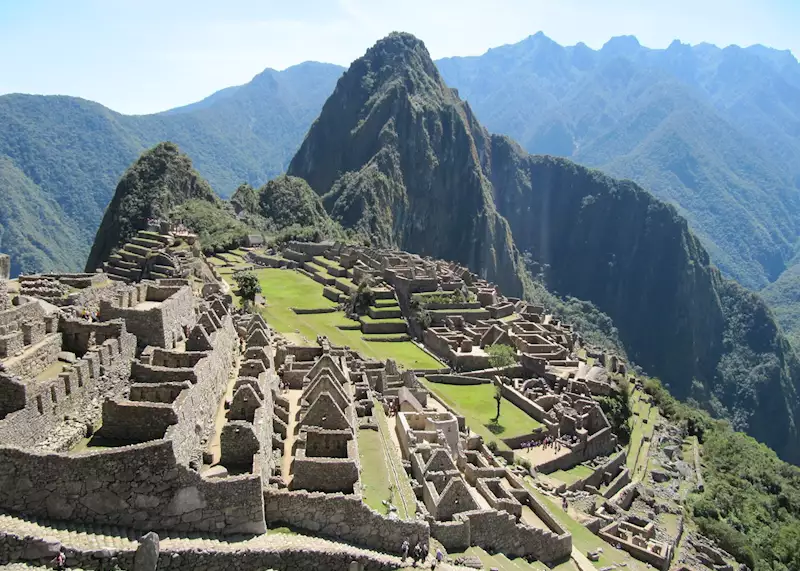
A common misconception is that Machu Picchu's altitude (2,430m) is the same as Cusco's (3,400m). It is not — Machu Picchu is nearly 1,000 metres lower than Cusco, which is why most people feel noticeably better at the ruins than in the city. The altitude of Machu Picchu itself is not a significant problem for most visitors. The problem is the journey from sea level to Cusco, and the Inca Trail's Day 2 ascent to Dead Woman's Pass (4,215m). Both require proper acclimatisation beforehand.