About Galápagos Islands
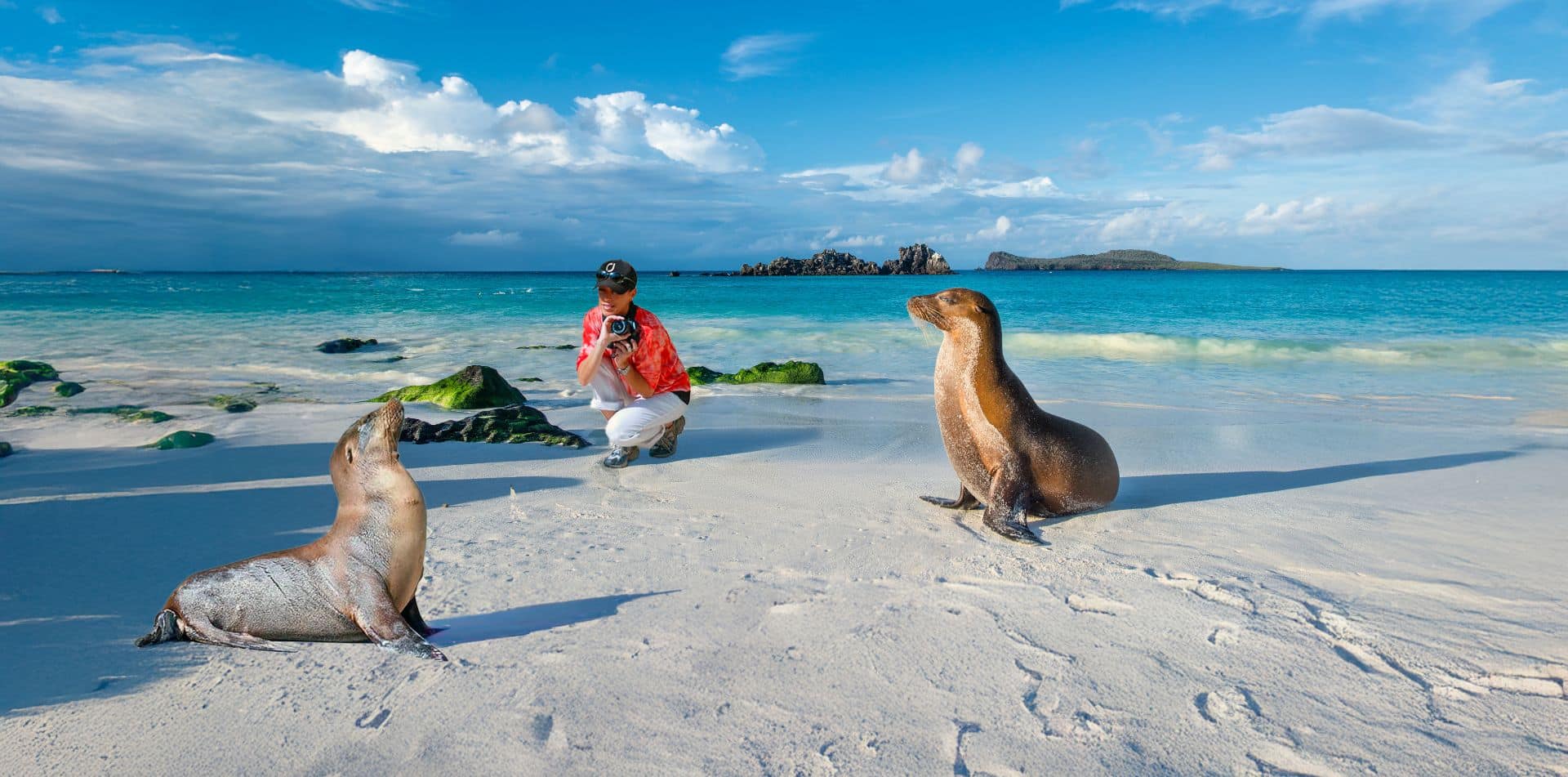
The Galápagos Islands are an archipelago of volcanic islands straddling the equator in the Pacific Ocean, about 1,000 km west of Ecuador. Their extraordinary isolation has produced a unique ecosystem where giant tortoises, marine iguanas, blue-footed boobies, and sea lions show almost no fear of humans. It was here that Charles Darwin developed his theory of evolution by natural selection, and the islands remain one of the world's premier wildlife destinations.
Planning your Galápagos Islands trip?
Galápagos cruises depart on fixed dates and sell out months ahead.
Everything You Need to Plan Your Trip
Top Attractions in Galápagos Islands
The Charles Darwin Research Station on Santa Cruz houses captive breeding programmes for the islands' giant tortoises. You can obs…
The wildlife of the Galápagos shows almost no fear of humans — sea lions sleep on benches, marine iguanas bask centimetres from…
Snorkelling in the Galápagos is extraordinary — playful sea lions will swim directly at you, sea turtles graze on the reef, and…
The most photographed scene in the Galápagos — the iconic Pinnacle Rock rising from a barren volcanic landscape that looks more…
Best Neighbourhoods in Galápagos Islands
The largest town in the Galápagos and the best base for land-based visitors. The Charles Darwin Research Station, Tortuga Bay (a 45-minute walk through cactus forest to a pristine beach), and day tours to nearby islands all depart from here. The most services, the widest range of accommodation, and the most reliable restaurant scene in the islands.
Sleeping aboard an expedition yacht allows you to visit multiple islands — including the remote outer islands (Española, Fernandina, Genovesa) that are completely inaccessible from land. All meals, expert naturalist guides, and all activities are included. A 7-night cruise is the minimum for a proper experience; 10–14 nights to reach the outer islands. The definitive Galápagos experience.
The provincial capital and alternative entry point — quieter than Puerto Ayora with a sea lion beach (Playa de los Marinos) right in the town centre. Good base for day trips to Española (2h by speed boat) and the Kicker Rock snorkelling site. Often overlooked in favour of Santa Cruz but excellent for avoiding the main tourist crowds.
The largest island and the least visited — penguin colonies on the western coast, flamingo lagoons at the edge of town, and a fraction of the tourist numbers of Santa Cruz. A perfect choice for a second Galápagos visit or for travellers wanting a more local feel. Tortoise breeding centre, snorkelling at Los Túneles, and volcano hiking on Sierra Negra are the highlights.
Best Time to Visit Galápagos Islands
Warmer water (22–26°C), calmer seas, and excellent snorkelling with sea turtles, marine iguanas, and sea li…
The cold Humboldt Current brings cool, nutrient-rich water (18–22°C), spectacular marine diversity, and the…
Peak nesting season for many species — blue-footed boobies displaying and breeding, Nazca boobies active on …
Humpback whales migrate through the archipelago in these months. Whale sharks congregate at the remote outer i…
Top Tours in Galápagos Islands
 WildlifeWildlifeAdventure
Best Hotels in Galápagos Islands
BoutiqueFinch Bay Eco Hotel
The Finch Bay Eco Hotel is the only hotel on Santa Cruz Island with direct beach access, and its com...
LuxuryPikaia Lodge
The finest land-based hotel in the Galápagos — a design-led lodge on 400 acres of private ranch o...
BoutiqueScalesia Lodge
An intimate boutique lodge in the highlands of Santa Cruz — set within scalesia forest, the endemi...