You Don't Need the O Circuit
Patagonia's reputation is built on demanding multi-day treks like the O Circuit and full W Trek, which can make it feel intimidating for hikers without serious backcountry experience. The good news: some of Patagonia's most spectacular views are reachable on well-marked day hikes with no camping, no technical skill, and no multi-day commitment required. This guide covers the routes that deliver the payoff without the demands.
Mirador Base Torres (Half of the W Trek)
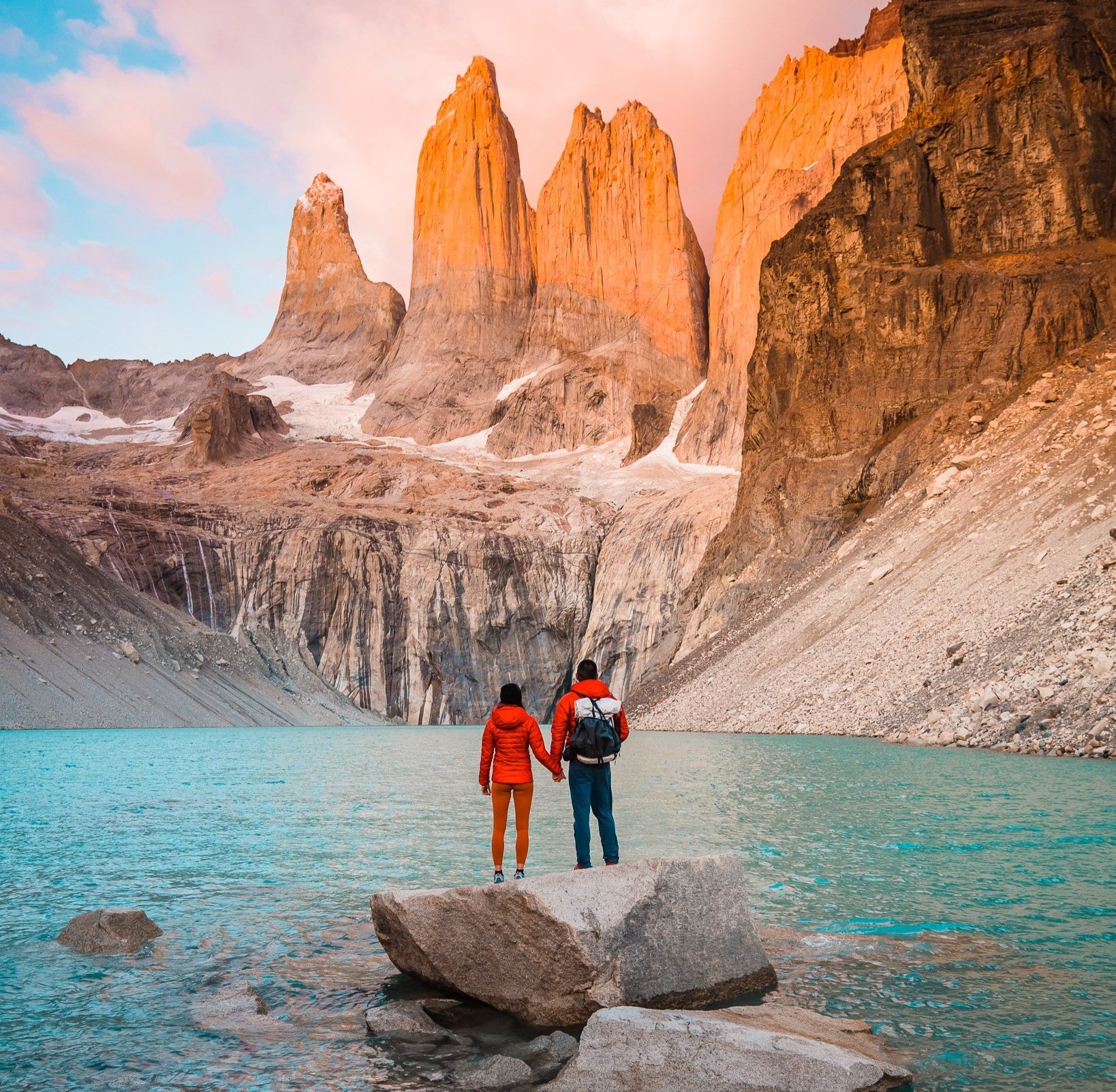
This is technically part of the W Trek but is entirely doable as a standalone day hike from a Torres del Paine base — 19km round trip with around 900m of elevation gain to the iconic viewpoint of the three granite towers. It's a genuinely tough day (7–9 hours) but requires no overnight gear, no navigation skill beyond following a clearly marked trail, and can be done from a hotel or refugio base rather than as part of a multi-day trek. This is the single hike most visitors mean when they picture "Patagonia."
Sendero Laguna de los Tres, El Chaltén
El Chaltén, Argentina's trekking capital, has genuinely free trailheads right from town — no park entrance fee, no permit. The hike to Laguna de los Tres, the classic Fitz Roy viewpoint, is 20km round trip with the final steep kilometre being the only genuinely demanding section. Most of the trail beforehand is gentle, well-graded forest walking. Budget 8–10 hours, or split it by camping partway (also free, at designated sites) if a single long day feels daunting.
Sendero Laguna Torre
The easier of El Chaltén's two signature hikes — 18km round trip to a lake facing Cerro Torre, with far less elevation gain than Laguna de los Tres and a gentler overall gradient. A good first choice if you want to test your fitness before attempting the tougher Fitz Roy route on a subsequent day.
Mirador Cóndores and Mirador Las Águilas
Short, genuinely easy hikes from El Chaltén town itself — 1–2 hours round trip, minimal elevation gain, and a good option for an acclimatisation day or a lower-effort afternoon between the bigger hikes. Both offer solid views over the town and surrounding peaks without any real physical demand.
What Makes a Hike "Beginner-Friendly" Here
The key factors: well-marked, non-technical trails (no scrambling, no route-finding skill needed); day-hike length rather than requiring overnight gear; and manageable elevation gain relative to distance. All the hikes above meet those criteria, but "beginner-friendly" in Patagonia still means genuinely long days by general hiking standards — 15–20km with real elevation gain is standard even for the "easy" options here. Build in rest days, and don't underestimate the wind, which adds real fatigue that flat-terrain hiking experience doesn't prepare you for.
Practical Tips for First-Timers
Start with a shorter hike (Mirador Cóndores, or Laguna Torre over Laguna de los Tres) before attempting the longer routes, to gauge your fitness against Patagonian conditions specifically. Check weather forecasts the morning of, not days ahead — Patagonian weather changes fast and forecasts more than 24 hours out are unreliable. Carry proper wind and rain protection even for "easy" hikes; conditions can turn regardless of trail difficulty. None of these hikes require booking or a guide, but Torres del Paine does require park entry payment, while El Chaltén's trails remain free.