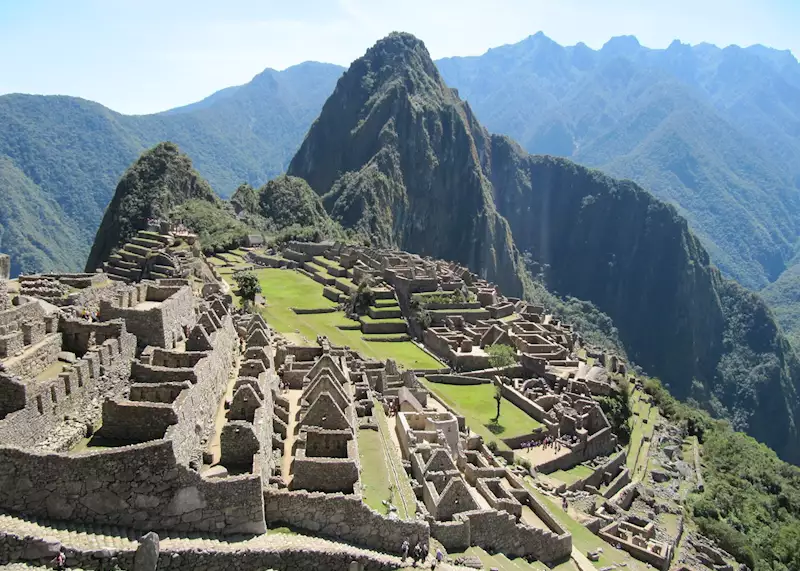
Option 1: The Train — The Standard Route
The most popular and convenient way to reach Machu Picchu is by train from either Poroy (20 minutes from Cusco by taxi) or Ollantaytambo (1.5 hours from Cusco by road, in the Sacred Valley) to Aguas Calientes, followed by a 25-minute bus up to the ruins. Two operators run the route: Peru Rail (Vistadome and Expedition classes) and Inca Rail. The Vistadome (panoramic windows, commentary) takes 3h30m from Poroy and costs $50–90 one-way. The Expedition (standard seating, no panoramic windows) is $35–65 and takes the same time. From Ollantaytambo, the journey is 1h30m and significantly cheaper ($25–50). The train journey itself — descending from high Andean plateau into subtropical cloud forest through the narrowing Urubamba gorge — is one of the great short train journeys in South America. Book online at perurail.com or incarail.com at least 2 weeks ahead in high season.
Train to Machu Picchu Cost Summary
Budget approach (Ollantaytambo-based): Cusco to Ollantaytambo by shared colectivo ($5) + Inca Rail Voyager from Ollantaytambo ($25–35) + bus Aguas Calientes to ruins ($12 return) = approximately $42–52. Standard approach: Peru Rail Expedition from Poroy ($55–80) + bus ($12) = $67–92. Premium: Peru Rail Vistadome from Poroy ($70–110) + bus ($12) = $82–122. Note: all prices exclude Machu Picchu entry ($52) and must be booked in advance online.
Option 2: The Bus from Hydroelectric — The Cheapest Way
The cheapest way to reach Machu Picchu without trekking involves a combination of public transport and walking. From Cusco, take a shared minivan from the Pavitos street terminal to Santa Maria ($8, 5 hours), change to a minivan to Santa Teresa ($3, 1 hour), then another to the Hydroelectric station ($3, 30 minutes). From Hydroelectric, it is a 3-hour walk along the railway tracks to Aguas Calientes (no vehicles — walking or train only). Total cost: approximately $14 one-way, total time 10–12 hours. This route is used primarily by budget backpackers and is not recommended for visitors with limited time, mobility concerns, or who are not comfortable with long, unescorted walks.
Option 3: The Inca Jungle Trek
The Inca Jungle Trek is a 4-day guided adventure combining mountain biking, white water rafting, zip-lining, and hiking — arriving in Aguas Calientes on Day 4 for a Day 5 Machu Picchu visit. It starts with a 65km downhill bike ride from Malaga Pass (4,316m) to Santa María — one of the great mountain bike descents in Peru. The trek is not the Inca Trail and does not follow Inca pathways, but it is excellent value and an outstanding adventure experience. Cost: $200–350 all-inclusive (bike, rafting, guide, accommodation, most meals, and train back to Cusco). Minimum booking: 4 people. Recommended for: active travellers who want more than a standard train trip and are not fixated on the historic Inca Trail route.
Option 4: The Classic Inca Trail and Alternatives
The 4-day Classic Inca Trail ($600–900 all-inclusive, permit required months ahead) and the 5-day Salkantay Trek ($350–700) both arrive at Machu Picchu on foot — the Classic Inca Trail via the Sun Gate at dawn, the Salkantay via Aguas Calientes and the standard bus. For the complete comparison of these trekking options, see our dedicated Inca Trail vs Salkantay article. The short answer: the Inca Trail provides the most historically and emotionally resonant approach to Machu Picchu; the Salkantay the most dramatic mountain scenery.
Practical Recommendation
For most visitors: book the Peru Rail Expedition from Ollantaytambo (combining with a Sacred Valley day trip on the way) for the best combination of cost, convenience, and experience. Add the Vistadome class if the budget allows — the panoramic windows make a genuine difference to the cloud forest section of the journey. Book as early as possible — trains sell out in peak season just as Machu Picchu entry tickets do.