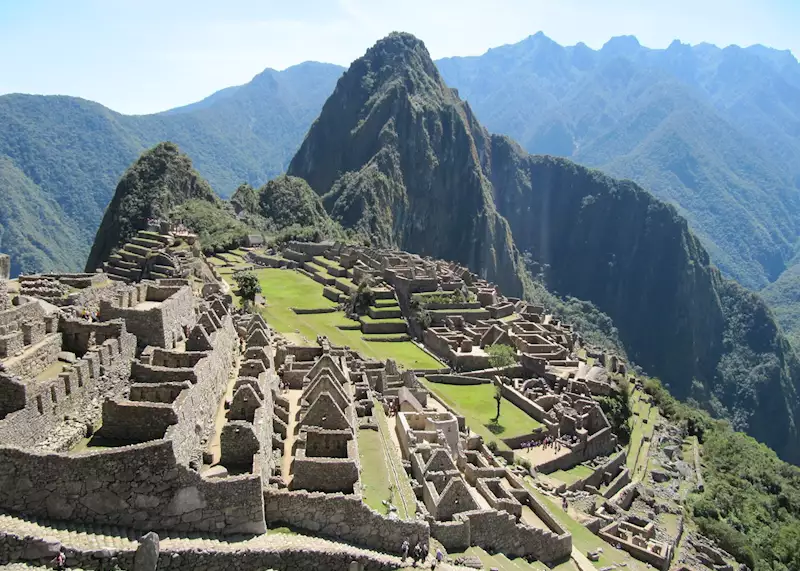
Few decisions in South American travel spark as much debate among hikers as the choice between the Inca Trail and the Lares Trek. Both routes lead to the wonder of Machu Picchu. Both pass through extraordinary Andean landscapes. Both demand a reasonable level of fitness and reward you with memories that last a lifetime. But beyond those shared qualities, the two experiences diverge dramatically — in atmosphere, logistics, scenery, cultural immersion, and cost.
This guide breaks down every dimension of the comparison so you can choose the trek that suits your travel style, budget, and priorities.
The Basics: What Are These Treks?
The Inca Trail
The Classic Inca Trail is a 43-kilometre (26-mile) route that follows ancient Inca footpaths through the Andes to the Sun Gate (Inti Punku) above Machu Picchu. Most hikers complete it over four days and three nights, camping at designated sites along the way. The trail passes through multiple climate zones, traverses two high mountain passes, and visits a series of genuinely impressive Inca ruins. It culminates with an arrival at Machu Picchu through the Sun Gate just as the morning mist burns off — an experience so celebrated it has become almost mythological in the backpacker world.
The trail is managed under a strict permit system by the Peruvian government. Only 500 people per day are allowed on the trail, including guides and porters. Permits sell out months in advance — sometimes within hours of release — and must be booked through a licensed operator. Independent trekking is not permitted.
There is also a two-day "Short Inca Trail" option that covers the final 12 kilometres of the route, arriving at the Sun Gate on the morning of day two. This is suitable for those with limited time or fitness, though it lacks the full journey experience.
The Lares Trek
The Lares Trek is a less-regimented alternative that winds through remote Andean villages and high-altitude lakes in the Lares Valley, north of Cusco. There is no single fixed "Lares Trek" — several different routes of varying lengths and difficulty are marketed under this name, ranging from two to four days. Most versions cover between 30 and 40 kilometres and reach altitudes of up to 4,700 metres (15,400 feet).
Unlike the Inca Trail, the Lares Trek does not lead directly to Machu Picchu on foot. Instead, trekkers complete the walking portion and then descend to Ollantaytambo, where they board the train to Aguas Calientes (the town below Machu Picchu) and visit the site the following day.
There are no permit restrictions on the Lares Trek. Numbers are far lower than on the Inca Trail, and the route feels genuinely off-the-beaten-path.
Scenery and Landscapes
Inca Trail
The Inca Trail scenery is best described as spectacularly varied. On day one, you walk through a subtropical river valley alongside the Urubamba River. Day two takes you to the brutal Dead Woman's Pass (Warmiwañusca) at 4,215 metres — the highest point of the trek — before descending into cloud forest. Days three and four move through increasingly lush and dense jungle, passing cloud-shrouded ruins draped in moss and orchids. The final approach to the Sun Gate offers a panoramic view of Machu Picchu set against its dramatic mountain backdrop.
What makes the Inca Trail visually distinctive is the combination of Andean altitude, cloud forest, and archaeological sites woven together. You are literally walking through layers of ecosystem.
Lares Trek
The Lares Trek offers a completely different kind of beauty. This is high-altitude grassland (puna) scenery: sweeping treeless valleys, glacial lakes reflecting snowy peaks, herds of alpaca grazing on hillsides, and traditional Quechua villages with stone-walled fields. The Lares Valley sits close to the Nevado Chicon glacier, and on clear days the views of the snowy peaks above Lares are breathtaking.
If the Inca Trail feels like a jungle-mountain hybrid, the Lares Trek feels like a pure Andean highland experience — open, windswept, and raw. There are far fewer trees. The light in the high puna is extraordinary, particularly in the late afternoon.
Winner for dramatic archaeological scenery: Inca Trail Winner for raw Andean highland beauty: Lares Trek
Cultural Experience
This is arguably the Lares Trek's greatest advantage.
Inca Trail
The Inca Trail passes through several ruins — Llaqtapata, Runkurakay, Sayacmarca, Phuyupatamarca, and Wiñay Wayna — which are fascinating and relatively uncrowded compared to Machu Picchu. But the communities living along the trail corridor are largely absent from the trekking experience. You camp at designated sites, pass through few living villages, and the cultural interaction is predominantly with your guide and porters rather than with local communities.
Lares Trek
The Lares Trek is fundamentally different. It passes through working Quechua communities where traditional weaving, agriculture, and pastoral life continue much as they have for centuries. You may walk through a village to find women in traditional dress weaving on backstrap looms outside their homes. Children in colourful clothing herd animals along the same paths you are following. Some operators arrange homestays or visits to local families, and the interaction between trekkers and community members — though always mediated by guides and language barriers — can be genuinely meaningful.
For travellers who want to understand the living culture of the Andes rather than simply its archaeological past, the Lares Trek is often the more rewarding choice.
Winner for cultural immersion: Lares Trek
Crowds and Atmosphere
Inca Trail
Despite the permit limits, the Inca Trail can feel crowded. With 500 people per day allowed on the trail, popular campsites fill with tents, and certain sections — particularly around the ruins of Wiñay Wayna — can resemble a slow-moving queue. The energy is high and communal, which some people love, but if you imagined yourself alone in the mountains communing with the ancient Inca, the reality may be surprising.
The Sun Gate arrival at Machu Picchu is similarly crowded. The moment is still powerful, but you will be sharing it with dozens of other trekkers who have spent four days working toward the same emotional payoff.
Lares Trek
The Lares Trek is substantially quieter. On many days, your group may encounter no other trekkers at all. The campsite atmosphere is more intimate, and there is a genuine sense of solitude in the high-altitude valleys. For introverts, for couples wanting privacy, and for anyone seeking a more meditative hiking experience, this is a significant advantage.
Winner for solitude: Lares Trek Winner for social trekking atmosphere: Inca Trail
Difficulty and Altitude
Both treks are accessible to reasonably fit hikers who have spent a few days acclimatising in Cusco (3,400 metres). Neither requires technical mountaineering skills.
Inca Trail
The classic four-day Inca Trail is rated moderate to challenging. The main difficulty is Dead Woman's Pass on day two — a steep, sustained climb to 4,215 metres followed by a demanding descent. Day three involves further undulating terrain through cloud forest. The altitude affects everyone differently, and some hikers experience significant symptoms. Total elevation gain and loss over the four days is substantial.
The trail surface is well-maintained stone in many places — original Inca stonework — which can be surprisingly slippery when wet and tough on knees on the descents.
Lares Trek
The Lares Trek reaches higher altitudes than the Inca Trail on most route variants, with some passes exceeding 4,600 metres. Day one is typically the most punishing, climbing steeply from the valley floor to the first high pass. The views from the top reward the effort.
Total daily distances are similar to the Inca Trail, and the terrain varies from open grassland to rocky switchbacks. The altitude combined with the physical output makes adequate acclimatisation equally important.
Overall difficulty: Roughly comparable. Lares may reach slightly higher altitude; Inca Trail has more cumulative elevation change.
Logistics and Permits
Inca Trail
Booking the Inca Trail is notoriously stressful. Permits go on sale in early October for the following year and can sell out within days or even hours for peak season dates (May to September). You must book through a licensed operator, and your passport number is registered on the permit — there is no transferability.
This means planning 6–12 months ahead is essentially mandatory for the peak season. If you are a spontaneous traveller, this is a serious logistical obstacle.
Operators are numerous and range widely in quality and price. A reputable operator will include camping equipment, meals, a guide, and a porter allowance (typically 7 kg of personal gear carried by a porter, in addition to their own equipment and communal gear).
Lares Trek
The Lares Trek requires no permit. You can book it with a week or even a few days' notice, making it a far more accessible option for spontaneous travellers or those who missed out on Inca Trail permits. Operators in Cusco sell Lares Trek packages year-round.
The train connection to Aguas Calientes from Ollantaytambo does require a ticket, and during peak season these can also book out, so some advance planning is still advisable.
Winner for easy logistics: Lares Trek Winner for iconic finish: Inca Trail
Cost
Inca Trail
Budget operators offering four-day Inca Trail packages start at around USD $500–600 per person, but quality at this price point is variable. Reputable mid-range operators charge $700–900, while premium companies offering smaller groups, better food, and superior camping equipment may charge $1,000–1,400.
The price includes the permit fee (which alone costs around $150–200), guide, porters up to a set weight limit, meals, camping gear, and bus transfer from Machu Picchu to Aguas Calientes.
Lares Trek
The Lares Trek is meaningfully cheaper. Packages typically run $350–600 per person depending on the operator, group size, and number of days. Because there is no permit fee, and because competition among operators is strong, prices tend to be more negotiable.
Entry to Machu Picchu itself costs additional — currently around $50–60 depending on the time slot — and is the same for both treks.
Winner on cost: Lares Trek
Best Time to Go
Both treks are best done in the dry season: May to October. June, July, and August are the most popular months, offering the most reliable weather but also the highest crowds on the Inca Trail.
The shoulder months of May and September offer a good balance: fewer crowds on the Inca Trail, more permits available, and largely dry conditions. April sees the last of the rains and can be muddy; November marks the start of the wet season.
The Inca Trail is closed for the entire month of February for maintenance — no exceptions.
The Lares Trek can be done in the wet season (November to April) by adventurous trekkers, though the highland passes become boggy, views are obscured, and camping is genuinely cold and wet.
Who Should Choose the Inca Trail?
- Travellers who want the iconic experience and are comfortable planning 6–12 months ahead
- Those motivated by archaeology and Inca history
- People who enjoy the social, communal atmosphere of trekking alongside many others
- Hikers for whom the dramatic Sun Gate arrival at Machu Picchu is a bucket-list moment
- Anyone who wants a beautifully managed, well-signed trail with regular infrastructure
Who Should Choose the Lares Trek?
- Spontaneous travellers who haven't planned far ahead
- Those seeking genuine cultural immersion in living Quechua communities
- Hikers who prefer solitude and a quieter trail
- Budget-conscious travellers wanting to reduce costs
- Anyone who missed out on Inca Trail permits and needs an alternative
- Travellers more interested in landscape photography than ruins
Can You Do Both?
Yes — and many people do. A common itinerary involves doing the Lares Trek first (three or four days), spending a night or two in Aguas Calientes to recover and visit Machu Picchu, then returning to Cusco for further acclimatisation before tackling the Inca Trail a week or so later. This is logistically complex and expensive, but it gives you the complete picture of both experiences.
Alternatively, some travellers do the Short Inca Trail (two days) as an add-on after the Lares Trek, though this requires careful permit booking.
The Verdict
There is no objectively better choice — only the better choice for your particular trip. If the Inca Trail permit is available and your budget allows, it offers one of the genuinely iconic hiking experiences in the world. The combination of Inca ruins, diverse ecosystems, and the theatrical Sun Gate arrival is hard to replicate.
But the Lares Trek should not be treated as a consolation prize. Its cultural richness, solitude, and raw Andean scenery offer something the Inca Trail simply cannot provide. For a significant number of travellers, the Lares ends up being the more memorable experience — precisely because it is quieter, more human, and less packaged.
If you can only do one and you have the permits secured: Inca Trail. If you are booking with limited notice, on a tighter budget, or hunger for cultural depth over archaeological spectacle: Lares Trek.
Either way, you arrive at Machu Picchu. And that, at the end of it all, is a very fine destination to arrive at.