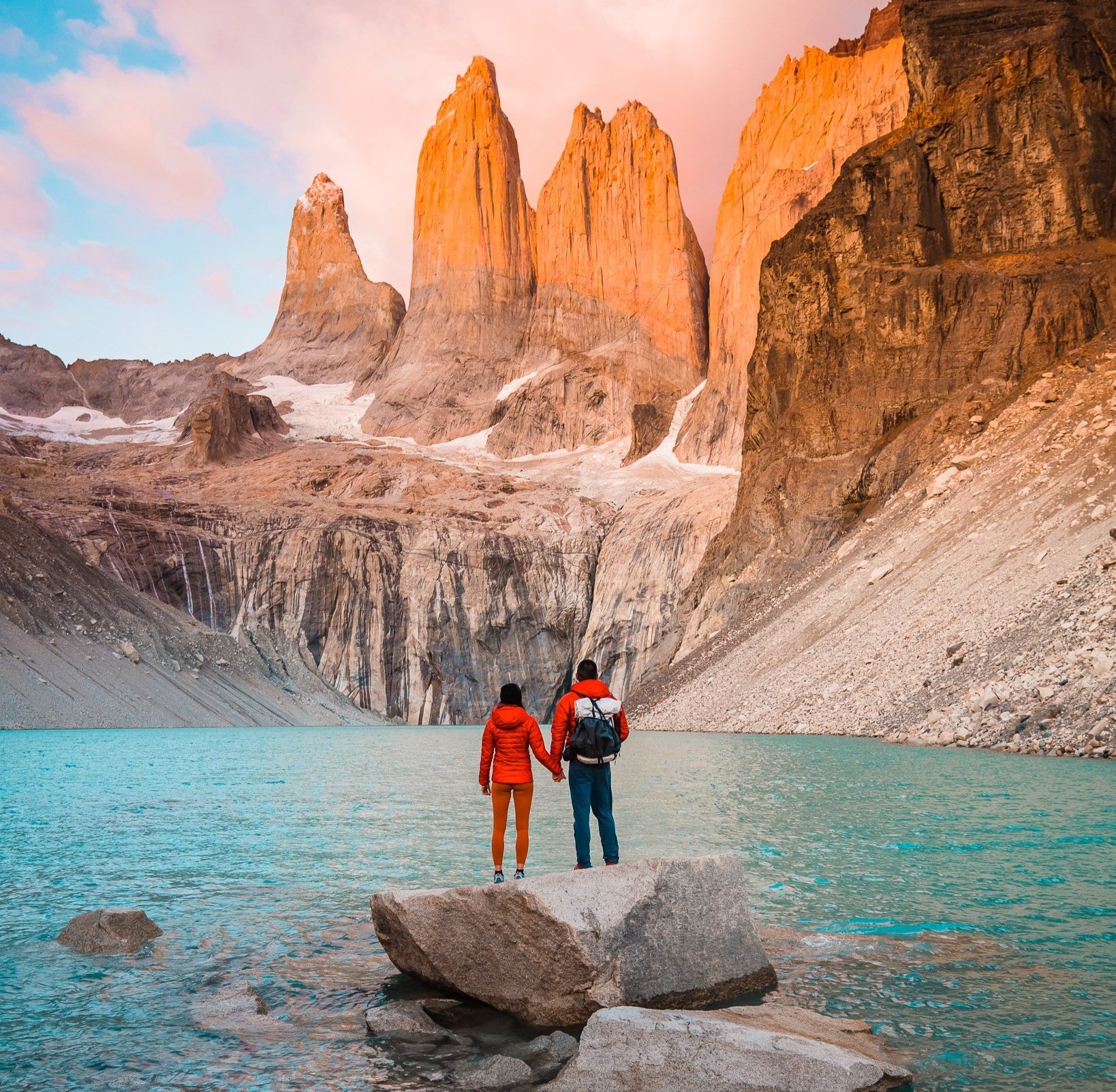
What Is the O Circuit?
The O Circuit is the complete circumnavigation of the Paine Massif in Torres del Paine National Park — approximately 130 kilometres over 9–11 days. It includes the entire W Trek (the southern section of the circuit, covering the three classic viewpoints: Las Torres, Valle del Francés, and Grey Glacier) plus the remote northern section that loops around the back of the massif through the wild Dickson and Los Perros valleys and over the John Gardner Pass. The O Circuit sees approximately 10–15% of the visitor numbers of the W Trek, and the northern section — particularly the Dickson and Los Perros valleys — has a genuine remoteness and wildness that the W Trek, with its well-developed refugio infrastructure, cannot replicate.
The circuit's name comes from its rough circular shape when viewed on a map, forming an "O" around the granite towers and peaks of the Paine Massif. This circumnavigation takes you through every major ecosystem in the park: the windswept Patagonian steppe, ancient lenga beech forests, alpine terrain above the treeline, glacial valleys, and the edge of the Southern Patagonian Ice Field. The trail passes through landscapes sculpted by glacial action over millions of years, creating the dramatic geology that makes Torres del Paine one of Chile's most spectacular national parks.
O Circuit vs W Trek Patagonia
The W Trek covers the three most famous viewpoints in Torres del Paine (4–5 days, 70km, high infrastructure). The O Circuit covers all of these plus 60km of additional remote northern terrain. The additional section is not simply more of the same — it is categorically different in character. The Dickson Valley has extraordinary puma density and a remote mountain-lake setting. The Los Perros valley is dense beech forest with river crossings. The John Gardner Pass (1,241m) delivers the most expansive view in the entire circuit — the Southern Patagonian Ice Field stretching to the horizon, the Grey Glacier descending from the ice field in a blue-white cascade, and the full Paine Massif behind you. It is one of the great viewpoints in South America. The O Circuit is for trekkers who want the complete Torres del Paine experience, not just the highlights.
The infrastructure difference between the two treks is significant. W Trek trekkers can stay in refugios (mountain huts) with hot showers, restaurant meals, and beds with provided bedding. The northern section of the O Circuit has no such luxuries — it's tent camping for four to five consecutive nights with basic toilet facilities and no shower access. This means carrying significantly more weight but also experiencing the park in its raw, unfiltered state. Wildlife encounters, particularly with pumas and guanacos, are far more common on the northern section due to the reduced human presence and the remote valleys that serve as wildlife corridors.
Best Time to Visit the O Circuit
The O Circuit hiking season runs from October through April, but conditions vary dramatically within this window. October through November represents early season conditions with unpredictable weather, potential snow on the John Gardner Pass, and limited daylight hours (approximately 14 hours of daylight in November). However, this period offers the advantage of fewer crowds and the possibility of witnessing spring wildflower blooms in the valleys.
December through February is peak season, offering the most stable weather conditions, longest daylight hours (up to 17 hours in December), and the warmest temperatures. Average highs reach 15-20°C, though Patagonian weather remains notoriously unpredictable. This period also coincides with the highest demand for bookings and the busiest trails. March through April represents shoulder season with cooler temperatures, shorter days, and the spectacular autumn colors of the lenga beech forests. However, weather becomes increasingly unpredictable, and early season snow can close the John Gardner Pass by late April.
O Circuit Difficulty: Realistic Assessment
The O Circuit is rated difficult — the John Gardner Pass section is the crux. The pass accumulates significant snow through the winter and into November; conditions on the pass can deteriorate rapidly, and the CONAF rangers at Los Perros will halt groups if conditions make the crossing dangerous. Average fitness is not sufficient for the O Circuit — you need strong cardiovascular fitness, experience with multi-day hiking, and comfort with genuinely variable weather and terrain. Daily distances of 18–24km with 400–800m elevation change are sustained over 9–11 days. The northern section has no refugios — camping is mandatory for 4–5 nights.
Beyond pure physical fitness, the O Circuit demands mental resilience and practical wilderness skills. Trekkers must be self-sufficient for extended periods, capable of setting up camp in high winds, and prepared for potentially dangerous river crossings, particularly in the Los Perros valley where water levels can rise rapidly during storms. The psychological challenge of the northern section cannot be understated — the isolation, combined with harsh weather conditions and the physical demands of carrying a full pack for multiple days, tests even experienced trekkers. Weather can change from clear skies to horizontal rain and 80km/h winds within minutes, requiring constant awareness and the ability to make sound decisions under stress.
Detailed Day-by-Day O Circuit Itinerary
Most trekkers follow a standard 9-day itinerary, though 8-day and 10-day variations exist depending on individual pace and side trip preferences. Day 1 typically begins at Las Torres base camp, hiking to Seron (18km, 5-6 hours) through open pampa with spectacular views of the eastern face of the Paine Massif. Day 2 continues from Seron to Dickson (18km, 5-6 hours), following the Paine River through increasingly remote terrain with excellent wildlife viewing opportunities.
Day 3 represents the transition into the most remote section, hiking from Dickson to Los Perros (12km, 4-5 hours) through dense lenga forest with multiple river crossings. This shorter day serves as preparation for the challenging John Gardner Pass crossing. Day 4 is the crux day — Los Perros to Grey Glacier camp (22km, 8-10 hours) via the John Gardner Pass. This day includes the steepest ascents and descents of the entire circuit and the most dramatic elevation changes.
Days 5-7 follow the more developed southern section of the circuit, visiting Grey Glacier, the French Valley, and concluding with the iconic Las Torres viewpoint. Each day offers world-class scenery but with the comfort of refugio infrastructure and established trails. The final days allow for recovery from the demanding northern section while still delivering the spectacular landscapes that make Torres del Paine world-famous.
Booking the O Circuit: CONAF and Concessionaires
Booking the O Circuit is significantly more complex than booking the W Trek. The northern section campsites (Seron, Dickson, Los Perros) are operated by Vertice Patagonia and must be booked in advance. The eastern section campsites (Torres, Chileno, Central, Los Cuernos) are operated by Fantastico Sur. The Grey and Paine Grande refugios and campsites are again Vertice. The critical booking date is August 1, when the following season opens. For December–February O Circuit dates, all sites should be booked within the first 2–3 days of August 1 opening. The most difficult sites to secure are Dickson and Los Perros — extremely limited capacity, extremely high demand relative to supply.
The booking process requires creating accounts with both operators and booking each section separately, often within hours of the August 1 opening to secure prime dates. Payment is required in full at the time of booking, and cancellation policies are strict with significant penalties. Budget approximately $400-500 USD for accommodation alone on the O Circuit, significantly more than the W Trek due to the extended duration and limited capacity in the northern section. Many trekkers find success by having multiple people attempt bookings simultaneously or by being flexible with travel dates to increase availability options.
John Gardner Pass: What to Expect
The John Gardner Pass crossing (Day 7 or 8 on most itineraries) is the O Circuit's defining experience. The ascent from Los Perros camp climbs through lenga beech forest before emerging above the tree line onto exposed terrain. The final approach to the pass is steep and often involves snow — crampons may be needed in November and early December. On the pass itself, the wind is almost always present and often severe. The view — the full Southern Patagonian Ice Field, the Grey Glacier, and the Paine Massif — is available only if visibility allows; cloud can close in rapidly. The descent on the other side is steep and often muddy. Most trekkers cite the John Gardner Pass as the emotional and physical highlight of the entire circuit.
Weather conditions on the pass can change from clear and calm to dangerous within minutes. Rangers monitor conditions closely and will close the pass if wind speeds exceed safe limits or if visibility drops below minimum standards. When conditions permit crossing but remain challenging, rangers may require trekkers to cross in groups and may provide specific timing windows. The exposed section above treeline extends for approximately 3-4 kilometers, with the final 500 meters to the pass summit requiring careful footing on potentially icy or snow-covered rocks. The descent on the western side drops 800 meters over 6 kilometers, with sections of steep, loose rock that become treacherously slippery when wet.
Gear Requirements for the Northern Section
The northern O Circuit section requires camping gear (tent, sleeping bag rated to -5°C, sleeping mat, cooking equipment) that is not needed by W Trek refugio trekkers. Most gear shops in Puerto Natales rent camping equipment; book ahead for peak season. The tent must be capable of withstanding Patagonian wind — cheap two-season tents fail on the O Circuit. A 3-season or 4-season tent with a sturdy pole system is the minimum. Trekking poles are essential for the John Gardner Pass descent.
Beyond basic camping gear, specific items become crucial for O Circuit success. A high-quality rain jacket and pants are mandatory — not water-resistant, but fully waterproof with taped seams. Patagonian storms can last 12-18 hours with driving rain that penetrates any weakness in gear. Base layers should be merino wool or synthetic; cotton kills in cold, wet conditions. Multiple insulation layers allow for precise temperature regulation as conditions change rapidly throughout each day.
Food planning requires careful consideration — trekkers must carry 4-5 days of food for the northern section, adding significant pack weight. High-calorie, lightweight options include dehydrated meals, nuts, dried fruits, energy bars, and instant oatmeal. A reliable water filtration system is essential, as natural water sources are abundant but require treatment. Pack covers or dry bags protect essential gear from Patagonia's notorious horizontal rain, which can soak packs despite rain flies.
Wildlife and Safety Considerations
Torres del Paine hosts one of the world's highest concentrations of pumas, with density particularly high in the northern section of the O Circuit. While puma attacks on humans are extremely rare, proper food storage and campsite management are essential. All food must be stored in provided lockers or bear canisters — never in tents. Pumas are most active at dawn and dusk, and trekkers should remain alert during these periods.
River crossings in the Los Perros valley present the most significant safety challenge after weather exposure. Water levels can rise rapidly during storms, turning manageable crossings into dangerous torrents. Never attempt to cross swollen rivers — wait for conditions to improve or seek alternative routes. Always unbuckle pack waist belts before crossing rivers to allow quick pack removal if swept away. Use trekking poles for stability and cross at the widest, shallowest points available.
Emergency procedures are limited in the remote northern section. Satellite communication devices provide the only reliable emergency contact, as cell phone coverage is non-existent. CONAF rangers patrol the circuit but may be hours or days away during emergencies. Weather exposure represents the most common serious risk — hypothermia can develop rapidly in wet, windy conditions even during summer months. Recognition of early hypothermia symptoms and immediate treatment protocols can be life-saving.
Puerto Natales: Gateway to the O Circuit
Puerto Natales serves as the primary staging point for O Circuit expeditions, located 112 kilometers from Torres del Paine National Park. The town offers comprehensive services for trekkers: gear shops, equipment rental, restaurants, accommodation, and transportation to the park. Arrive at least two days before your trek begins to allow time for gear preparation, food shopping, and weather monitoring.
Several outfitters in Puerto Natales specialize in O Circuit gear rental and sales. Erratic Rock, Patagonia Adventure Expedition, and Chile Nativo offer quality equipment rental with knowledgeable staff who understand the specific demands of the O Circuit. Book rental equipment in advance during peak season, and inspect all gear carefully before accepting — gear failure in the northern section can be dangerous and expensive to replace.
Food shopping for the 4-5 day northern section requires visiting multiple stores. Unimarc supermarket offers the best selection of lightweight, high-calorie options, while smaller shops provide specialty items like fuel canisters and water purification tablets. Pack all food in Puerto Natales — no resupply opportunities exist in the northern section. Budget approximately $80-100 USD per person for northern section food, prioritizing calorie density over variety to minimize pack weight.