What Happens in Winter
Torres del Paine's austral winter runs from May through September. The W Trek and O Circuit are effectively closed for standard trekking from mid-May — the John Gardner Pass on the O Circuit accumulates dangerous levels of snow and ice, and most refugios close their doors after the April shoulder season. CONAF (the Chilean park authority) restricts access to the main backcountry circuits. Day hiking on the lower trails remains possible throughout winter, and the park itself never fully closes. What changes is who visits and why — the summer trekking crowd disappears completely, replaced by a small number of specialist visitors who come specifically for what winter offers.
The transformation is dramatic. Summer's constant parade of trekkers along the park's main routes gives way to an almost cathedral-like silence. The famous refugios that accommodate hundreds of hikers in peak season stand shuttered, their wooden frames weathering the Patagonian winds alone. Park rangers reduce their presence to essential safety monitoring, and the visitor center operates on reduced hours. What remains is the raw essence of Torres del Paine — the geological drama of the massif, the relentless wind, and the wildlife that calls this landscape home year-round.
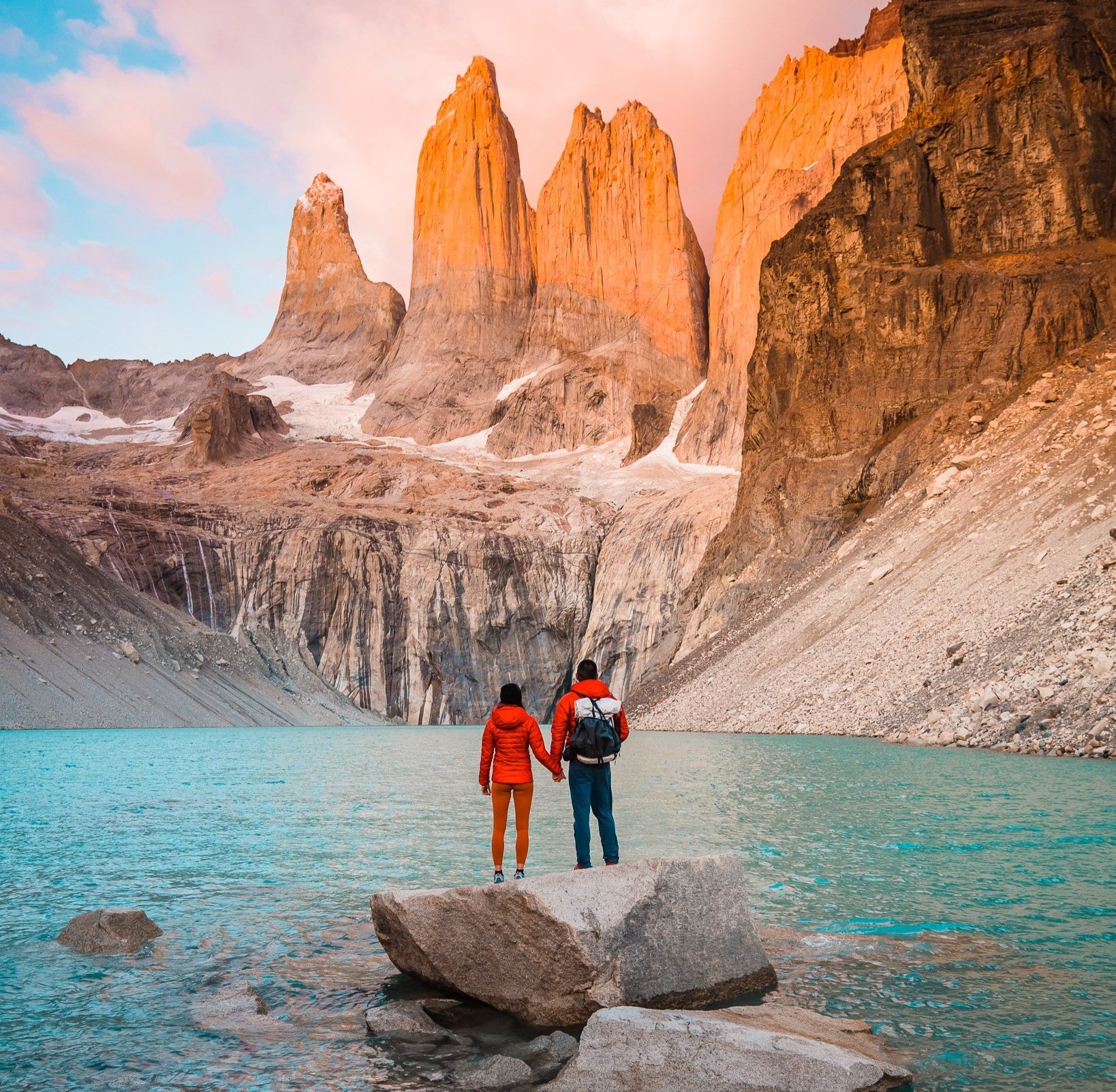
Weather systems in winter are more intense and less predictable than summer conditions. The park can experience sudden temperature drops to -10°C (14°F), horizontal snow driven by winds exceeding 100 km/h, and complete whiteouts that last for days. Conversely, winter can also deliver crystalline days with perfect visibility when the towers appear knife-sharp against brilliant blue skies, their granite faces streaked with fresh snow. These contrasts — the park's capacity for both fury and transcendent beauty — become more pronounced in the off-season.
The Puma Season
Winter is unambiguously the best season for puma watching in Torres del Paine — and arguably the primary reason to visit in June or July. In summer, pumas remain in the forest and higher elevations where prey is abundant and dispersed. In winter, the guanaco herds descend to the lower pampas and valley floors to escape the snow, and the pumas follow them. The open grasslands of the park's lower zones mean that pumas hunting guanaco are visible to patient observers in a way that is genuinely impossible in summer. Specialist operators running puma-tracking expeditions from June to August report sighting rates of 80–90% over a 3–4 day programme. The Torres towers themselves — when visible through winter cloud — are often snow-dusted and extraordinary.
The puma tracking itself follows a precise methodology developed by local guides over decades of winter observation. Trackers begin before dawn, reading the landscape for signs — fresh tracks in snow or mud, scent markings, kill sites, and the behavior of prey species. Guanacos display distinct alarm calls and clustering patterns when pumas are near, creating a readable network of information across the pampas. A successful tracking day might involve following a puma for hours as it moves between hunting grounds, observes prey, and occasionally makes a kill.
The experience requires genuine patience and realistic expectations. Puma watching is not zoo observation — these are wild predators in their natural environment, and their behavior follows no schedule. A typical day starts at 6 AM and can extend until dark, with long periods of waiting and watching punctuated by intense activity. The reward, however, is witnessing one of the continent's apex predators in its natural hunting grounds, often with the dramatic backdrop of snow-covered peaks.
Beyond pumas, winter wildlife viewing includes increased chances of seeing Andean condors, which concentrate near guanaco herds and potential carcass sites. Foxes become more visible as they scavenge, and the park's bird life shifts to winter-adapted species. The ecological relationships between predator and prey become visible in winter in ways that summer's abundance obscures.
Patagonia Winter Trekking: What Is Actually Possible
Day hiking from the main park lodges (Explora Patagonia and the few hotels that remain open year-round) covers the lower sections of the park without the avalanche risk and technical difficulty of the backcountry passes. The Mirador Las Torres day hike (the base of the three towers) is typically accessible in winter with the right conditions and equipment — crampons may be needed on the upper section. The Grey Glacier remains accessible by boat from Lago Grey. The Salto Grande waterfall and Mirador Condor viewpoints are open year-round. This is not the W Trek — it is day hiking with a different objective.
The approach to winter hiking requires different skills and expectations than summer trekking. Routes that are straightforward in summer become technical challenges requiring winter hiking experience. The Mirador Las Torres trail, for example, transforms from a demanding but non-technical hike into a route requiring crampons, winter clothing systems, and the ability to navigate in whiteout conditions. The final moraine section becomes treacherous with ice, and the alpine environment above the treeline can shift from calm to life-threatening in minutes.
Alternative winter routes focus on the park's lower elevations and more sheltered areas. The Laguna Azul circuit offers excellent wildlife viewing opportunities with minimal elevation gain. The shores of Lago Grey provide spectacular iceberg watching and glacier views without the exposure of high-elevation routes. The Mirador Ferrier trail offers panoramic views of the massif when conditions allow, and remains accessible throughout winter with appropriate equipment.
Winter hiking groups should be limited to experienced hikers with appropriate gear and guided by operators who specialize in winter conditions. Self-guided hiking in winter is not recommended for most visitors — the consequences of weather changes, navigation errors, or equipment failure are significantly more serious than in summer. Even day hikes require contingency planning, emergency communication, and the flexibility to turn back when conditions deteriorate.
Torres del Paine Off Season: Practical Realities
The advantages of a winter visit are significant: dramatically lower prices (60–70% below peak season rates at lodges that remain open), complete absence of crowds on any accessible trails, the extraordinary quality of puma tracking, and the visual drama of snow on the Paine Massif. The disadvantages are equally real: limited accommodation options (most lodges close entirely — Explora Patagonia and Las Torres Patagonia are among the few that operate year-round), unpredictable and severe weather, short daylight hours (June has approximately 8 hours of light), and the closure of the signature trekking circuits. Winter in Torres del Paine is for a specific type of traveller: someone who is primarily interested in wildlife, who is not attached to completing a specific route, and who is comfortable with the possibility that weather will cancel plans.
Accommodation logistics become the primary planning challenge for winter visits. Most of the park's refugios, camping areas, and many hotels close completely from May through September. The few lodges that remain open often operate with reduced services — limited restaurant hours, restricted room service, and minimal recreational facilities. Booking becomes both easier and more complex: easier because demand is minimal, more complex because options are severely limited and cancellation policies become crucial when weather threatens travel plans.
Transportation to and within the park requires additional consideration in winter. Roads can become impassable with snow and ice, and the park service may temporarily close access entirely during severe weather events. Rental cars require winter tires and emergency equipment, and many rental agencies restrict vehicle use on park roads during winter months. Internal park transportation is reduced or eliminated — the catamaran services on Lago Grey operate on limited schedules, and some boat excursions cancel entirely during rough weather.
Communication and emergency preparedness take on heightened importance. Cell phone coverage within the park remains limited, and winter conditions can disrupt even emergency communication systems. Visitors should carry satellite communication devices, inform multiple parties of detailed itineraries, and carry emergency supplies even for day activities. Weather forecasts become critical daily reading, and plans must remain flexible enough to accommodate sudden changes.
Torres del Paine June July: Month by Month
June is the quietest month in the park — minimum visitor numbers, maximum solitude, and the beginning of the core puma hunting season. July is slightly more popular among winter specialists and has marginally longer days. August sees the first hints of spring — longer days and occasionally improving weather — while retaining the winter puma conditions. September is the transition month: refugios begin reopening, the first spring wildflowers appear on lower slopes, and the park begins its gradual return to the trekking season.
June represents the depths of Patagonian winter — the shortest days, the coldest temperatures, and the most unpredictable weather. Daylight extends from roughly 9 AM to 5 PM, with the sun tracking low across the northern sky throughout the day. Snow accumulation reaches peak levels on higher elevations, and the park takes on its most dramatic winter appearance. For photographers, June offers the most dramatic lighting conditions, with low-angle sun creating extraordinary contrast when weather permits clear views.
July brings subtle improvements in day length and occasional weather stability, making it the preferred month for many winter specialists. Puma activity remains at peak levels, but slightly longer days allow for extended tracking sessions. The month often delivers the clearest winter weather windows, when the towers emerge from cloud for several consecutive days and provide the iconic snow-covered granite views that define winter Torres del Paine imagery.
August marks the beginning of spring's approach, with daylight extending past 6 PM and temperatures beginning their gradual rise. Wildlife patterns start shifting as longer days and improving weather create different hunting and movement patterns. Late August often provides the most reliable weather windows for attempting longer day hikes, though winter conditions can return suddenly and without warning.
Essential Winter Gear and Preparation
Winter visits to Torres del Paine require expedition-level clothing and equipment, even for day activities. The four-layer clothing system becomes essential: moisture-wicking base layers, insulating mid-layers, windproof outer shells, and emergency backup layers. Temperatures can range from -10°C to 10°C (14°F to 50°F) in a single day, and wind chill can drop effective temperatures significantly lower. Quality rain gear rated for severe conditions is non-negotiable — Patagonian rain in winter can be horizontal and driven by winds that defeat inferior equipment in minutes.
Footwear requires particular attention in winter conditions. Waterproof hiking boots with aggressive tread patterns are minimum requirements, and microspikes or crampons should be carried for any route that gains elevation or crosses exposed terrain. Gaiters prevent snow from entering boots and provide additional lower-leg protection against wind and moisture. Multiple sock systems — liner socks and wool hiking socks — help prevent blisters and provide insulation even when damp.
Navigation equipment becomes critical when summer's clear trail markers disappear under snow or in whiteout conditions. GPS devices with preloaded park maps, backup batteries, and emergency communication capabilities are essential for any activity beyond lodge grounds. Traditional map and compass navigation skills become relevant again when electronic systems fail in cold conditions or low visibility.
Emergency and safety equipment should include emergency shelter (space blankets or bivy sacks), high-energy emergency food, first aid supplies adapted for cold-weather injuries, headlamps with extra batteries, and fire-starting materials that function in wet conditions. Even day hikers should carry enough emergency gear to survive an unexpected night out if weather prevents return to accommodation.
Photography and Winter Light
Winter photography in Torres del Paine offers unique opportunities unavailable during any other season, but requires technical adaptations for extreme conditions. The low angle of winter sun creates dramatic side-lighting and extended golden hour conditions that can last for hours when weather permits clear skies. Snow accumulation on the granite towers and surrounding peaks provides stark contrast and definition that transforms the massif's appearance entirely.
Camera equipment faces significant challenges in winter conditions. Batteries drain rapidly in cold temperatures, requiring external power sources or frequent battery rotation. Condensation becomes a constant threat when moving equipment between cold exterior conditions and heated interior spaces. Lens changes must be managed carefully to prevent internal condensation that can fog optics for days. Weather sealing becomes essential rather than optional, and backup equipment should be considered for serious photography objectives.
The most compelling winter photography opportunities often occur during dynamic weather conditions — snow squalls, clearing storms, and the interplay between light and dramatic skies. These conditions also present the greatest technical challenges and safety risks. Successful winter photography requires balancing artistic opportunities with practical limitations and safety considerations.
Who Should Visit in Winter
Winter Torres del Paine is for: wildlife photographers and puma enthusiasts (this is the primary reason to be here off-season); experienced mountain hikers comfortable with self-sufficiency and uncertain conditions; travellers who specifically want to see the park without crowds; and those who are genuinely indifferent to trekking circuits and primarily interested in landscape and wildlife. It is emphatically not for: first-time Patagonia visitors, travellers whose primary goal is completing the W Trek, or anyone who needs reliable conditions and predictable days.
The ideal winter visitor to Torres del Paine possesses specific characteristics that align with off-season realities. Experience with winter mountain environments is crucial — understanding how to dress for extreme conditions, recognizing signs of hypothermia and frostbite, and maintaining morale during extended periods of poor weather. Flexibility and patience become essential personality traits when weather cancels plans, delays transportation, or limits activities for days at a time.
Photography enthusiasts often find winter Torres del Paine transformative, particularly those specializing in landscape or wildlife photography. The combination of unique lighting conditions, dramatic weather, and exceptional wildlife viewing opportunities creates photographic possibilities that exist nowhere else. However, the technical demands of winter photography and the physical challenges of extended outdoor time in severe conditions require genuine commitment and preparation.
Travelers seeking authentic wilderness experiences often prefer winter visits specifically because of the reduced infrastructure and services. The park's essential character becomes more apparent when stripped of summer's commercial accommodations and managed experiences. However, this authenticity comes with genuine risks and responsibilities that summer visitors never encounter.