The Honest Baseline
There is no genuinely cheap way to visit the Galápagos. The $200 park entry fee is unavoidable, the flights from mainland Ecuador cost $200–400 return, and accommodation and food are expensive by Ecuadorian standards (everything is imported). The question is not whether the Galápagos is cheap but whether it is achievable on a budget — and the answer is yes, with realistic expectations and smart planning. A land-based budget trip of 5 days costs approximately $150–200/day all-in, versus $300–600/day for a mid-range cruise. That's still expensive by backpacker standards but accessible with specific planning.
The key to budget travel in the Galápagos is understanding what you're paying for and where you can make strategic compromises. Luxury cruises that cost $5,000–8,000 per person for 8 days reach remote islands and offer all-inclusive convenience, but a well-planned land-based trip can deliver 70% of the wildlife experience at 25% of the cost. The trade-off is less remote access and more self-organisation, but for most travellers, the savings justify this approach.
Budget travellers should also factor in that Ecuador uses the US dollar as its official currency, making price calculations straightforward. However, this also means no favourable exchange rate benefits that might exist in other South American countries. ATMs in Puerto Ayora and Puerto Baquerizo Moreno work reliably, but always carry cash backup as card machines can be temperamental, especially for the mandatory park entrance fee.
How Much Does the Galápagos Cost: The Breakdown
Park entry fee: $200 USD cash (paid at Baltra or San Cristóbal airport on arrival — bring exact change, no card machines). Return flights from Quito or Guayaquil: $200–350 on LATAM or Avianca (book 4–6 weeks ahead for the lowest prices). Accommodation in Puerto Ayora (Santa Cruz): hostel dorms $20–35/night, budget guesthouses $45–70/night private. Daily food: $20–35 (supermarkets exist; eating at local comedores rather than tourist restaurants cuts costs significantly). Day tours: $60–120/day for guided island excursions from Puerto Ayora. Total for 5 nights land-based: approximately $800–1,100 excluding flights and park fee — call it $1,200–1,600 total budget.
Breaking down the daily costs more specifically: breakfast at a local café costs $3–6 (coffee, eggs, bread), lunch at a comedor $6–12 (set menu with soup, main course, and drink), dinner $8–18 depending on whether you choose local spots or tourist-oriented restaurants. Grocery shopping can reduce food costs to $15–20 per day if you prepare some meals yourself — many budget accommodations provide basic kitchen access. A large water bottle costs $1.50, local beer $2.50–4, and imported wine starts at $12.
Transportation within islands is relatively affordable: buses around Santa Cruz cost $1–2 per journey, taxis $3–8 for most trips within town areas. Bicycle rental costs $15–20 per day and is excellent for exploring Puerto Ayora and reaching nearby sites like Tortuga Bay independently. Water taxi fares between islands ($35 each way) represent one of the better value transport options compared to small charter boats ($200–300 for similar routes).
Additional fees to budget for include: snorkel gear rental $8–12/day if not bringing your own, wetsuit rental $5–8/day (recommended even in warm months), and tipping for guides which typically runs 10–15% of tour costs. Camera housing rental for underwater photography costs $25–35/day from dive shops in Puerto Ayora.
Cheap Galápagos Trip: Land-Based Strategy
The budget approach is a land-based stay on Santa Cruz combined with day tours. Base yourself in Puerto Ayora (the main town, population 12,000 — genuinely functional with supermarkets, cafés, and services). The Darwin Research Station and the highland giant tortoise areas are free or very cheap from Puerto Ayora. Day tours to North Seymour (blue-footed boobies, frigatebirds, $80–100), Bartolomé (Pinnacle Rock, penguins, $90–110), and snorkelling at Los Túneles on Isabela ($100–130 including speedboat transfer) are the best value day excursions. The trade-off: you cannot reach Española, Fernandina, or Genovesa on day tours — these outer islands require a multi-day cruise. For more detailed trip planning, check out our complete Galápagos Islands travel guide.
The most effective land-based strategy involves mixing free and paid activities strategically. Start with the free Darwin Research Station to understand tortoise conservation, then visit the free giant tortoise reserve in the Santa Cruz highlands (bus $2 each way, entrance free). These give excellent wildlife introduction without tour costs. Follow up with one or two paid day tours to islands inaccessible independently — North Seymour for classic bird life or Bartolomé for the iconic Pinnacle Rock view and penguin snorkelling.
Book day tours the evening before rather than weeks in advance to compare prices between operators. Tour agencies line the main street in Puerto Ayora, and prices for identical tours can vary by $20–30. Ask specifically about group size (8–12 people is optimal vs 16-person groups), equipment quality, and what's included in lunch. Some budget operators cut corners on snorkel gear quality or provide basic sandwiches instead of proper meals.
Consider the timing of land-based visits carefully. Santa Cruz offers the most diverse free activities, Isabela provides unique species like flightless cormorants and penguins with reasonable tour access, while San Cristóbal has excellent shore-based wildlife viewing including sea lions and frigate birds. A strategic approach involves 2–3 nights on Santa Cruz for orientation and day tours, 1–2 nights on Isabela for distinctive species, and 1 night on San Cristóbal if time allows.
Galápagos Budget Island Hopping
Public water taxis (lancha) connect Santa Cruz to Isabela ($35 one-way, 2.5 hours) and Santa Cruz to San Cristóbal ($35, 2.5 hours). Staying one or two nights on each island rather than just Santa Cruz increases wildlife variety significantly — Isabela has penguins, flightless cormorants, and flamingos; San Cristóbal has a sea lion beach directly in the town. This three-island approach gives more diverse wildlife at a modest additional transport cost. Book the lanchas at the Puerto Ayora waterfront dock; no advance booking needed except in peak season. For a structured approach to island hopping, see our Galápagos Islands itinerary.
The lanchas operate on fixed schedules: departures are typically at 2:30pm daily (check current times at the dock as schedules occasionally change). Arrive 30 minutes early for tickets, especially during high season (December-January, June-August) when boats can fill up. The ride can be rough — bring motion sickness medication if you're susceptible, and pack electronics in waterproof bags as spray is common.
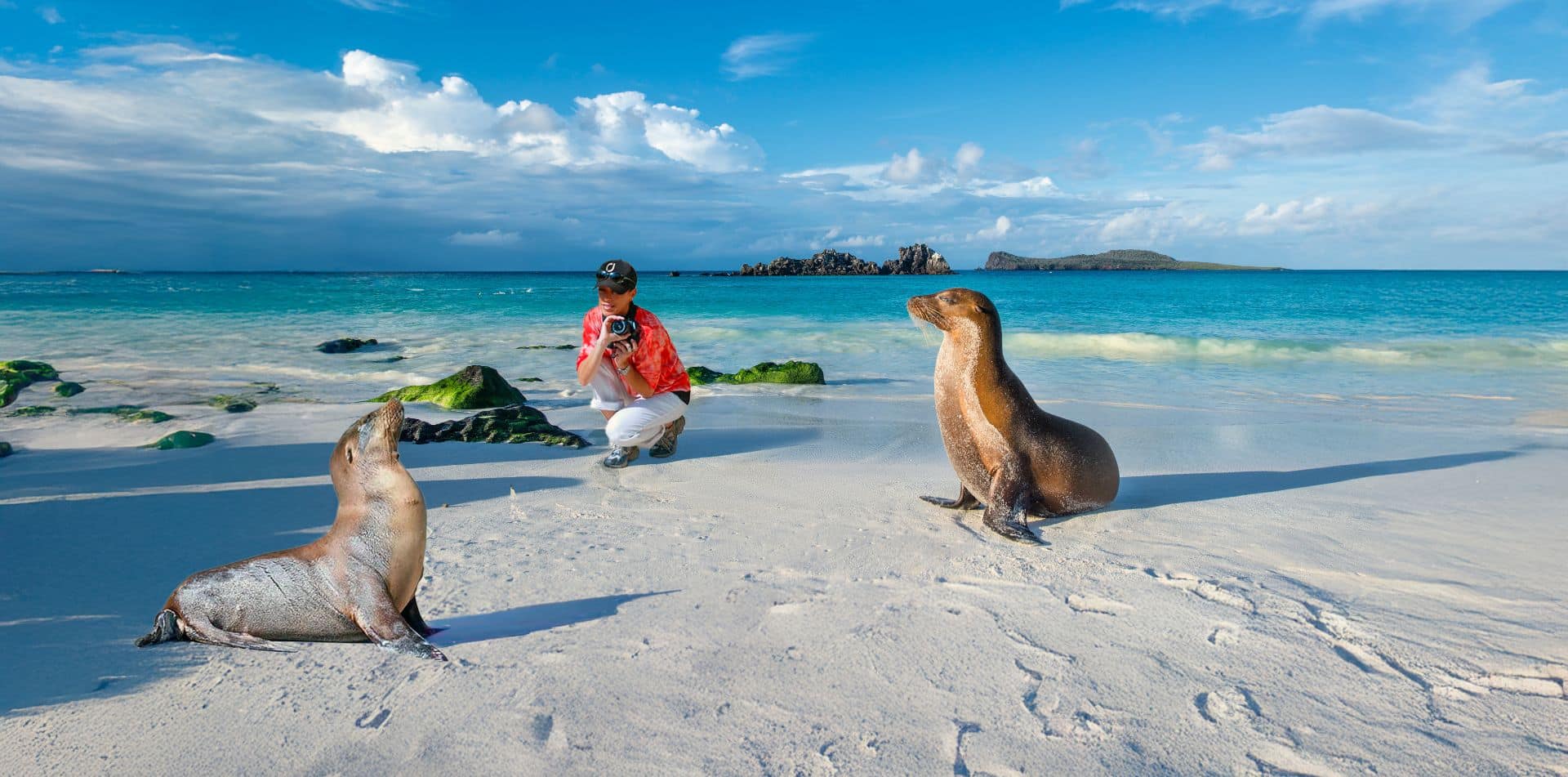
Each island offers distinct budget advantages. Santa Cruz has the most accommodation options and restaurant variety, keeping prices competitive. Isabela provides free shore-based wildlife viewing superior to other islands — marine iguanas, penguins, and flamingos are accessible without tours. San Cristóbal combines excellent free wildlife (the sea lion beach is steps from the town centre) with cheaper accommodation than Santa Cruz, as it sees fewer cruise ship day visitors.
Inter-island flights exist but cost $180–220 one-way, making them budget-unfriendly compared to water taxis. However, if prone to seasickness, the 30-minute flights might justify the expense. EMETEBE airline operates these routes with small planes — book directly through their office in Puerto Ayora for the best prices.
Free Snorkelling in the Galápagos
Several excellent snorkel sites in the Galápagos are accessible independently without paying for a tour. Playa Alemana (near Puerto Ayora, 20-min walk) has marine iguanas, sea turtles, and reef fish. La Lobería on San Cristóbal (taxi $3 from the town) has a sea lion colony directly on the beach. The tidal pools along the Puerto Ayora waterfront have marine iguanas and crabs accessible from the walking path. Snorkel equipment rental costs $8–12/day from Puerto Ayora dive shops. For more activities and wildlife spotting opportunities, explore our guide to Galápagos Islands things to do. If you're planning other South American adventures on a budget, consider visiting Machu Picchu budget tips or exploring Patagonia budget travel options.
Tortuga Bay, accessible via a 45-minute walk from Puerto Ayora, offers excellent free snorkelling at the far end of the beach in the mangrove area. The walk itself is worthwhile — a well-maintained trail through cactus forest where you'll spot finches and occasionally land iguanas. The beach has white sand and strong surf at the main section, but the protected cove at the far end provides calm water perfect for snorkelling with white-tip reef sharks, rays, and sea turtles.
Las Grietas, a series of volcanic cracks filled with crystal-clear water, is accessible via water taxi from Puerto Ayora ($0.80) followed by a 20-minute walk. While not technically snorkelling, the swimming is exceptional and completely free. The water temperature is perfect year-round, and the dramatic rock formations create a unique swimming environment unlike anywhere else in the Galápagos.
On Isabela, the Concha de Perla lagoon offers free snorkelling accessed via a 10-minute walk from Puerto Villamil. This protected lagoon regularly hosts sea turtles, white-tip sharks, and occasional penguins. The water is consistently calm, making it ideal for nervous snorkellers. The surrounding mangrove boardwalk provides excellent bird watching before and after swimming.
Money-Saving Accommodation Strategies
Budget accommodation in the Galápagos requires advance planning during peak seasons but offers good value for those willing to compromise on luxury. Hostels in Puerto Ayora like Red Mangrove Aventura Lodge or Galápagos Dreams provide dorm beds for $20–30 per night with basic breakfast included. These typically offer shared kitchens, allowing significant food savings through self-catering.
Private rooms in family-run guesthouses cost $45–70 per night and often include breakfast. These locally-owned establishments offer better value than international hotel chains while providing authentic interaction with Galápagos residents. Many family guesthouses can arrange day tours at lower prices than street operators, as they receive local discounts.
Consider staying slightly outside town centres for better prices. On Santa Cruz, accommodations in the highlands near the tortoise reserves cost 20–30% less than Puerto Ayora hotels while providing unique forest settings. However, factor in daily transport costs ($4–6 round-trip by bus) to reach the town for meals and tour departures.
Book directly with accommodations when possible rather than through international booking platforms, which often add 15–20% commission fees. Most guesthouses have WhatsApp contacts for direct communication and can offer better rates for multi-night stays.
Eating on a Budget in the Galápagos
Food costs represent a significant portion of Galápagos budgets, but strategic choices can halve daily expenses. Local comedores (small family restaurants) serve set lunches for $6–10 including soup, main course, drink, and sometimes dessert. These provide authentic Ecuadorian cuisine and generous portions. Look for places busy with local workers rather than tourists — a reliable indicator of quality and value.
Supermarket shopping reduces costs dramatically. Both Santa Cruz and San Cristóbal have well-stocked supermarkets selling basics like bread, fruit, tinned fish, pasta, and vegetables. Expect prices 50–80% higher than mainland Ecuador due to transport costs, but still significantly cheaper than restaurant meals. A day's groceries for simple meals costs $8–15 per person.
Fish markets in Puerto Ayora and Puerto Baquerizo Moreno sell ultra-fresh tuna, mahi-mahi, and grouper at excellent prices ($4–8 per pound). Many guesthouses allow guests to use kitchen facilities to cook purchased fish. Local fishing boats return around 3–4pm daily, offering the freshest selection.
Breakfast represents the best restaurant value — local cafés serve eggs, bread, fruit, and coffee for $3–5. Avoid hotel breakfast buffets unless included in room rates, as these typically cost $12–18 for standard continental offerings.
Street food is limited compared to mainland Ecuador, but small vendors near the main docks sell empanadas, fruit salads, and fresh coconut water at reasonable prices. Evening food trucks sometimes appear in Puerto Ayora's central park, offering burgers and grilled meat for $5–8.
Best Time to Visit for Budget Travel
Timing significantly affects Galápagos budget travel costs. Peak season (mid-December through January and June through August) sees accommodation prices increase 30–50% and tour availability decrease. However, weather conditions are optimal during these periods, with calm seas and reliable wildlife viewing.
Budget travellers should consider the shoulder seasons: February–May and September–November. Accommodation costs drop considerably, and day tour operators compete more aggressively for customers, leading to better prices and smaller group sizes. The trade-off is slightly less predictable weather, with possible rain showers during the warm season (December–May).
March and April represent the sweet spot for budget travel — tourist numbers are lower, prices moderate, and weather remains warm with generally calm seas. Wildlife activity is excellent during this period, with sea lions pupping and many birds in breeding plumage.
Avoid booking during Ecuadorian national holidays (especially Easter week and early August) when domestic tourism peaks and prices rise accordingly. Additionally, the last two weeks of December see premium pricing due to international holiday travel.
Flight prices from mainland Ecuador fluctuate significantly based on demand. Booking 4–6 weeks in advance typically provides the best balance of price and seat availability. Last-minute flights occasionally drop in price, but this strategy risks no availability during busy periods.
What to Pack for Budget Galápagos Travel
Packing strategically reduces equipment rental costs and ensures comfort during budget travel. Essential items include reef-safe sunscreen (critical for marine environment protection and often expensive locally), quality snorkel mask (rental masks frequently leak and cost $8–12 daily), and quick-dry clothing for multiple water activities.
A good daypack is essential for day tours and independent exploration. Include waterproof phone cases, as spray and splashing are common during boat transfers and snorkelling. Reusable water bottles save money and reduce plastic waste — tap water in Puerto Ayora and Puerto Baquerizo Moreno is safe to drink.
Comfortable walking shoes are crucial, as many sites involve uneven lava rock terrain. Flip-flops or water shoes are necessary for beach access and boat boarding. A lightweight rain jacket serves dual purposes for occasional showers and wind protection during boat trips.
Bring basic first aid supplies including band-aids, antiseptic cream, and motion sickness medication. Pharmacies exist on inhabited islands but have limited selections and high prices. Personal prescription medications should include extra supplies, as replacement options are limited.
Camera equipment benefits from protective housing, but expensive underwater cases can be rented locally if bringing valuable cameras. Basic waterproof cameras or phone housings provide adequate underwater photography for budget travellers without risking expensive equipment damage.
Practical Tips for Budget Success
Successful budget travel in the Galápagos requires flexibility and advance planning. Book flights and accommodation as early as possible while remaining flexible with day tour bookings to compare prices and group sizes. Many tour operators offer last-minute discounts for spaces they're struggling to fill.
Carry sufficient cash, as ATMs can run out of money, particularly on smaller islands. US dollar bills should be in good condition — damaged or very old notes are often rejected. Smaller denominations ($1, $5, $10 bills) are useful for tips, local transport, and small purchases.
Learn basic Spanish phrases related to wildlife and directions. While many tour guides speak English, local interaction in Spanish often leads to better prices and insider tips about free wildlife viewing opportunities.
Respect all wildlife regulations strictly — violations result in immediate deportation and permanent bans from returning. This includes maintaining 2-meter distances from all animals, not using flash photography, and following designated trails exactly. Budget travellers particularly benefit from free shore-based wildlife viewing, which depends on continued access through responsible behaviour.
Join other budget travellers for shared tour costs when possible. Many operators offer group discounts for 4+ people booking together. Hostels and guesthouses often facilitate these connections between like-minded travellers.