The City's Geography
Buenos Aires spreads across a flat delta plain on the Río de la Plata — its 48 barrios (neighbourhoods) form a grid of considerable scale. For visitors, the relevant area is roughly the northern and central band from La Boca in the south to Belgrano in the north, and from Puerto Madero on the river to Villa Crespo in the west. Everything within this band is accessible by Subte (metro), Uber, or reasonable walking distances.
The city's layout follows a logical grid pattern centred around the Plaza de Mayo, making navigation straightforward once you understand the basic structure. Most tourist attractions concentrate within this central zone, with the exception of a few outlying neighbourhoods that require specific transport arrangements. The Río de la Plata forms the eastern boundary — though it's more river than sea, stretching so wide you can't see Uruguay on the opposite shore from most vantage points.
Palermo: The Visitor's Hub
Palermo is Buenos Aires' largest barrio — further divided into Palermo Soho, Palermo Hollywood, and Palermo Chico, each with a distinct character. Palermo Soho (around Plaza Cortázar and Plazoleta Julio Cortázar) is the epicentre of the city's design, independent retail, and restaurant scene — more independent restaurants per square kilometre than almost anywhere in South America. Palermo Hollywood (named for the concentration of media companies) is quieter and slightly more residential. Palermo Chico is old-money residential — embassies, mansions, and the MALBA museum. For first-timers, Palermo Soho is the most convenient neighbourhood: safe, interesting, well-connected, and within walking distance of the city's best restaurants.
The accommodation range in Palermo suits every budget level. Luxury options include the Mine Hotel, a boutique property with rooftop views, and Fierro Hotel, known for its wine collection and intimate atmosphere. Mid-range choices like Poetry Building offer stylish rooms in converted townhouses, while backpacker favourites like Hostel Suites provide clean shared accommodations with common areas perfect for meeting fellow travellers.
Palermo's nightlife rivals any major international city. The neighbourhood's bars range from craft beer specialists like Antares to sophisticated cocktail lounges such as Florería Atlántico, hidden beneath a flower shop. Restaurants span from casual parrillas serving perfect steaks to internationally acclaimed establishments like Tegui and Don Julio. The neighbourhood's tree-lined streets make evening strolls pleasant and safe, with most venues concentrated along Honduras, Thames, and Gorriti streets.
Shopping enthusiasts will find Palermo irresistible. Local designers showcase their work in boutiques along Armenia and Thames streets, offering everything from leather goods to contemporary fashion. Weekend markets, particularly the Saturday market at Plaza Serrano, feature handmade crafts, vintage clothing, and local art. The neighbourhood also hosts several shopping centres, including Palermo Soho and Alto Palermo, for those preferring traditional retail experiences.
San Telmo: History and Tango
San Telmo is Buenos Aires' oldest neighbourhood — colonial buildings, narrow streets, and the famous Sunday antiques market at Plaza Dorrego that fills the entire neighbourhood with vendors, tango dancers, and visitors. The neighbourhood has a bohemian, slightly rough-edged character that contrasts with the polish of Palermo — exactly what makes it interesting. The tango culture is more authentic here than anywhere else in the city: La Catedral, on a quiet San Telmo street, is the most atmospheric milonga in Buenos Aires. Stay here if you want tango, history, and a neighbourhood where the tourists haven't yet completely displaced the locals.
Beyond the Sunday market, San Telmo offers daily discoveries along its cobblestone streets. Defensa Street, the neighbourhood's main artery, features antique shops, tango venues, and traditional cafés that have operated for decades. Café Tortoni, while touristy, remains an essential experience for its historic atmosphere and excellent coffee. More authentic local experiences await at Bar El Federal or Café San Juan, where neighbourhood residents gather for afternoon cortados and evening wine.
The architecture tells Argentina's immigrant story through magnificent facades. Many buildings date from the late 19th century when wealthy families lived here before moving north to Recoleta and Palermo. Today, these former mansions house hostels, restaurants, and cultural centres. The Pasaje de la Defensa, a restored colonial building, now contains artisan workshops and small restaurants perfect for lunch between antique browsing.
Accommodation options reflect the neighbourhood's character. Tango-themed boutique hotels like Mansion Dandi Royal offer immersive experiences with on-site milonga lessons. Budget travellers find excellent hostels such as Hostel Carlos Gardel and Circus Hostel, both featuring common areas where spontaneous tango sessions often occur. The neighbourhood's guesthouses, many in converted historic buildings, provide intimate settings that larger hotels cannot match.
Recoleta: Grand Architecture
Recoleta is Buenos Aires at its most European and most self-consciously elegant — wide Haussmann-style boulevards, French Neoclassical architecture, and the famous Recoleta Cemetery where Eva Perón and Argentina's oligarchy are buried in extraordinary mausoleums. The neighbourhood's hotels include the Alvear Palace (one of the grandest hotels in South America), and the restaurant scene, while expensive, is excellent. For visitors whose primary interest is the cemetery, the MALBA museum (actually in Palermo Chico, adjacent to Recoleta), and the grand architecture, staying in Recoleta makes sense. It is less vibrant than Palermo for evening activity.
The cultural offerings extend well beyond the famous cemetery. The Centro Cultural Recoleta presents contemporary art exhibitions and avant-garde performances in a stunning former monastery. The Palais de Glace, once a skating rink for the elite, now houses rotating art exhibitions and cultural events. These venues, combined with the neighbourhood's numerous galleries, create a sophisticated cultural circuit walkable within a few blocks.
Dining in Recoleta emphasizes quality over quantity. La Biela, the legendary café facing the cemetery, serves excellent medialunas and coffee alongside impeccable people-watching opportunities. Upscale restaurants like Oviedo and La Bourgogne (in the Alvear Palace) offer refined cuisine that matches the neighbourhood's elegant atmosphere. The weekend market at Plaza Francia provides more casual dining options alongside handicrafts and local art.
Shopping reflects the area's upscale character. Patio Bullrich, housed in a beautiful former livestock market building, contains luxury brands and designer boutiques. The streets surrounding the mall feature antique dealers specializing in fine Argentine silver, European furniture, and rare books. For those seeking exclusive Argentine leather goods, Recoleta's shops offer some of the country's finest craftsmanship, though at corresponding prices.
La Boca: Visit, Don't Stay
La Boca — the colourful corrugated-metal neighbourhood at the mouth of the Riachuelo river — is one of Buenos Aires' most photographed areas. El Caminito's painted houses are genuinely vivid and worth photographing. The Boca Juniors stadium La Bombonera, in the same neighbourhood, is one of the great footballing venues in the world. The critical caveat: do not stay in La Boca, and do not wander beyond the two-block tourist zone of El Caminito. The surrounding neighbourhood has high crime rates and is not safe for visitors who are unfamiliar with the city. Come for a guided visit, see the Caminito, go to a Boca match if possible, and return to Palermo or San Telmo for the evening.
The neighbourhood's football culture deserves special attention for sports enthusiasts. La Bombonera (officially Estadio Alberto J. Armando) offers stadium tours on non-match days, providing access to the dressing rooms, press areas, and museum showcasing Boca Juniors' rich history. Diego Maradona played here, and his presence still permeates the stadium atmosphere. Match tickets require advance planning, particularly for superclásico matches against River Plate, which sell out immediately.
The artistic heritage of La Boca centers on the legacy of painter Benito Quinquela Martín, whose depictions of port life made the neighbourhood famous worldwide. His former home and studio, now the Museo de Bellas Artes de La Boca, displays his work alongside pieces by other Argentine artists. The nearby Fundación Proa presents contemporary art exhibitions in a restored warehouse building, offering cultural depth beyond the tourist attractions.
Puerto Madero: The Modern Alternative
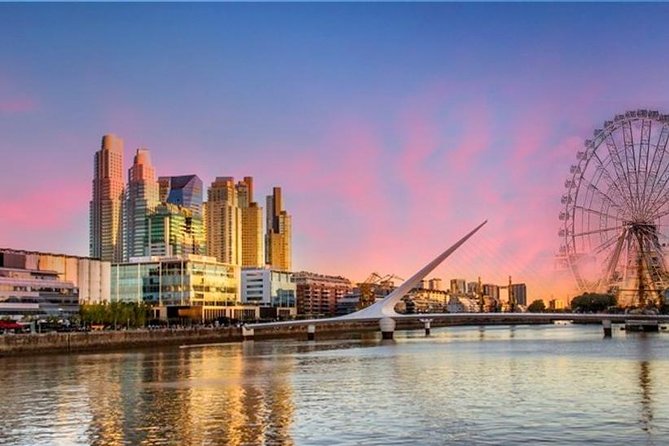
Puerto Madero is Buenos Aires' newest neighbourhood — a converted dock district of glass towers and waterfront restaurants occupying the city's eastern riverfront. Safe, clean, and dramatically different from the rest of the city, it is where business travellers and convention visitors stay. For leisure travellers, it feels isolated from the city's cultural energy — interesting for a walk along the waterfront and dinner at the Dique 4 restaurants, but not the right place to base a Buenos Aires visit.
The neighbourhood's engineering represents one of South America's most successful urban renewal projects. The four docks (diques) each serve different purposes: Dique 1 focuses on business and residential towers, Dique 2 houses restaurants and the cinema complex, Dique 3 contains the Convention Centre and luxury hotels, while Dique 4 offers the highest concentration of waterfront dining options. The Puente de la Mujer, designed by Santiago Calatrava, serves as the area's architectural centerpiece.
Dining in Puerto Madero emphasizes premium steakhouses and international cuisine. Cabaña Las Lilas ranks among Buenos Aires' most expensive restaurants, serving impeccable beef with views over the water. More moderate options include Siga La Vaca, offering all-you-can-eat parrilla experiences, and various seafood restaurants taking advantage of the maritime setting. The neighbourhood's bars cater primarily to business travelers and tend to close earlier than venues in other areas.
The accommodation level reflects Puerto Madero's business focus. The Four Seasons Hotel Buenos Aires offers luxury amenities and harbour views, while the Hilton Buenos Aires provides reliable international standards with conference facilities. Boutique options are limited, reflecting the neighbourhood's corporate character rather than leisure tourism appeal.
Villa Crespo and Chacarita: Emerging Neighborhoods
Villa Crespo has transformed from a working-class neighbourhood into Buenos Aires' emerging creative district. The area around Murillo and Scalabrini Ortiz attracts young Argentines with its affordable rent, innovative restaurants, and growing nightlife scene. Brew pubs like Strange Brewing Company and Blest represent the city's craft beer movement, while restaurants such as Chui and Gran Dabbang offer creative cuisine at prices significantly lower than Palermo equivalents.
The neighbourhood's architecture reflects its immigrant heritage, with buildings from the early 1900s now housing design studios, independent bookshops, and vintage clothing stores. The street art scene rivals San Telmo's murals, with large-scale works covering entire building facades along major avenues. For travelers seeking authentic local experiences without tourist crowds, Villa Crespo provides an ideal base for exploring Buenos Aires' contemporary culture.
Belgrano and Las Cañitas: Northern Alternatives
Belgrano offers a more residential experience while maintaining excellent access to central Buenos Aires attractions. The neighbourhood's Chinese quarter around Arribeños Street features authentic Asian cuisine and grocery stores serving the city's growing Asian population. Belgrano's parks, including the extensive Barrancas de Belgrano, provide green spaces for relaxation between sightseeing expeditions.
Las Cañitas, adjacent to Palermo, centers around the polo grounds and attracts an affluent, international crowd. The neighbourhood's restaurant scene emphasizes upscale casual dining, with establishments like La Cabrera Norte offering excellent steaks in refined settings. Accommodation options include several boutique hotels catering to polo enthusiasts and business travelers preferring a quieter alternative to central Buenos Aires.
Getting Around Buenos Aires Neighborhoods
The Subte (metro) system efficiently connects major neighbourhoods, with Line D serving the most tourist-relevant areas from Palermo through downtown to La Boca. Single journey tickets cost minimal amounts, while rechargeable SUBE cards offer convenience for multiple trips. The system operates from 5 AM to approximately 11 PM on weekdays, with reduced weekend hours.
Taxis and ride-sharing services provide door-to-door convenience, particularly useful for late-night returns from restaurants or tango venues. Uber operates throughout the city with reliable service and transparent pricing. Traditional taxis are abundant but ensure the meter is running or agree on prices beforehand for tourist destinations.
Walking remains the best method for exploring individual neighbourhoods. Most areas of tourist interest cover compact zones easily navigable on foot. The city's generally flat terrain makes walking comfortable, though summer heat (December through February) can be intense during midday hours.
Practical Tips for Neighborhood Selection
Consider your visit timing when choosing accommodation. December through March sees intense summer heat, making air-conditioned accommodations essential. Pool access becomes valuable during these months, available primarily in upscale hotels or some Palermo boutique properties.
Language considerations vary by neighbourhood. Palermo and Puerto Madero feature more English-speaking staff at hotels and restaurants, while San Telmo and Villa Crespo offer more authentic Spanish-language immersion experiences. Basic Spanish phrases prove invaluable regardless of location choice.
Safety awareness differs between neighbourhoods. Palermo and Recoleta allow comfortable late-night walking, while San Telmo requires more attention to surroundings after midnight. Always avoid displaying expensive electronics or jewelry, and use registered taxis for late-night transportation from any location.
Budget allocation should account for neighbourhood price differences. Recoleta and Puerto Madero command premium prices for dining and accommodation, while Villa Crespo and some San Telmo areas offer significant savings without sacrificing experience quality. Plan accordingly based on your total travel budget.
Where to Stay: The Summary
First time in Buenos Aires: Palermo Soho. Best restaurant access, most interesting streets, safest for exploring independently, well connected by Subte and Uber. Second visit: San Telmo or Palermo Hollywood for a more neighbourhood feel. Travelling for business or conferences: Puerto Madero or Microcentro. Budget: Hostel options in San Telmo offer the best combination of price, atmosphere, and location. After exploring Buenos Aires, consider extending your Argentina adventure to other remarkable destinations like Iguazu Falls on the border with Brazil, or venture south to Patagonia. For a broader South American journey, Rio de Janeiro makes an excellent addition to your itinerary, and Peru's iconic Machu Picchu offers one of the continent's most unforgettable experiences.