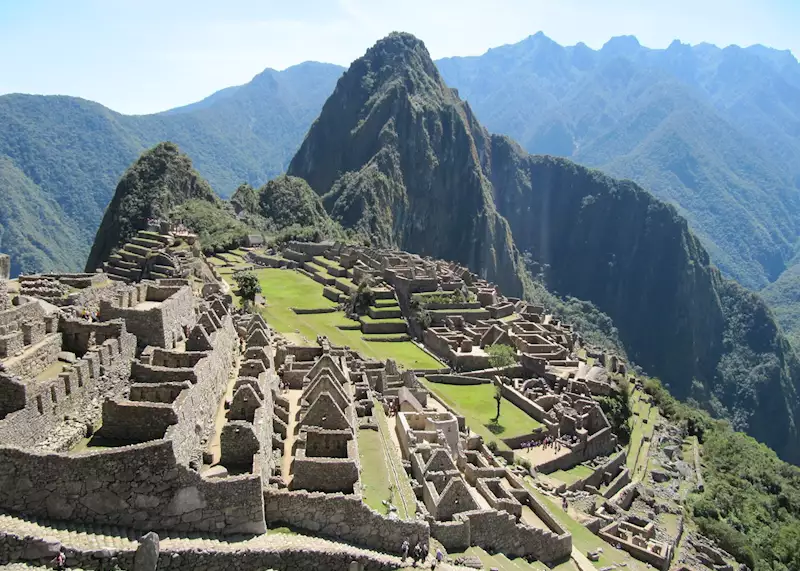
What Is the Sacred Valley?
The Sacred Valley (Valle Sagrado) of the Incas follows the Urubamba River for approximately 60 kilometres between Pisac and Ollantaytambo, sitting at an average altitude of 2,800 metres — some 600 metres lower than Cusco. This lower altitude made the valley the agricultural heartland of the Inca Empire, producing maize that would not grow at Cusco's elevation. The Incas considered the Urubamba River (which they called Willkamayu, or Sacred River) the earthly reflection of the Milky Way — hence the sacred in its name.
The valley's significance extends far beyond its agricultural productivity. The Incas engineered this landscape into a masterpiece of terraced agriculture, water management, and sacred architecture that remains largely intact today. The numerous archaeological sites scattered throughout the valley — from massive fortresses to experimental agricultural centres — demonstrate the sophistication of Inca civilisation and their deep connection to the Andean environment.
Climate-wise, the Sacred Valley enjoys a more temperate environment than Cusco, with warmer days and less severe altitude effects, making it an ideal place to acclimatise before visiting higher-altitude sites. The valley's protected position between mountain ranges creates a microclimate that the Incas exploited for cultivating crops that couldn't survive at higher elevations, including the sacred corn varieties that formed the backbone of their empire.
Pisac: Market and Ruins
The town of Pisac, 30 kilometres from Cusco, is most famous for its Sunday market — one of the largest and most authentic in the Andes, where local Quechua communities sell textiles, ceramics, and produce. The market is best visited early (7–9am) before the tour bus crowds arrive. Above the town, the Pisac Inca ruins are among the most impressive in the Sacred Valley — a citadel of temples, agricultural terraces, and residential compounds spread across a dramatic ridge. The Temple of the Sun at Pisac is architecturally among the finest examples of Inca stonework outside Machu Picchu. Allow 3 hours for the ruins; combined with the market, a full Pisac day is very well spent.
The Sunday market actually consists of three distinct areas: the tourist artisan market on the main square, the produce market where locals shop, and a smaller but authentic textile market in the streets behind the church. For the most genuine experience, explore the produce section where you'll find exotic Andean fruits like cherimoya and lucuma, dozens of potato varieties, and locally grown quinoa. Tuesday and Thursday markets are smaller but less crowded and offer better prices for textiles and crafts.
The archaeological site of Pisac spans four distinct areas connected by Inca paths: Qanchisracay (ceremonial sector), Pisaqa (residential area), Intihuatana (Temple of the Sun), and Kinchiracay (agricultural terraces). The site required innovative engineering to build on such steep terrain — note the sophisticated drainage systems and the way buildings are integrated into the natural rock formations. The Intihuatana sector contains the most sacred structures, including the Temple of the Sun with its precisely carved granite altar and the original intihuatana (sun dial) stone.
Practical tip: Purchase the Cusco Tourist Ticket (Boleto Turistico) which covers Pisac ruins plus nine other sites for $47 — much better value than individual entries. The ruins can be reached by a steep 45-minute hike from town, or by taxi ($15 round trip). Early morning visits (8–9am) offer the best light for photography and fewer crowds.
Ollantaytambo: The Living Inca Town
Ollantaytambo is the Sacred Valley's most significant archaeological site and, uniquely, a town that has been continuously inhabited since Inca times — many streets still follow the original Inca urban grid, and local families live in houses built on Inca foundations. The Ollantaytambo fortress is extraordinary — a steep cascade of agricultural terraces protecting a temple complex at the summit, with the legendary Inca stonework (including the partially completed Temple of the Sun) visible at close range. Ollantaytambo is also the departure point for trains to Aguas Calientes and Machu Picchu, making it a practical overnight base for Machu Picchu visits that avoids the altitude of Cusco.
The fortress tells a dramatic story — it was the site of one of the few Inca victories over Spanish conquistadors. In 1537, Manco Inca's forces used the fortress's strategic design to defeat Hernando Pizarro's cavalry, flooding the plain below and forcing the Spanish to retreat. The steep terraces were specifically designed for defence, with narrow passages that prevented enemy cavalry charges and strategic positions for defenders.
The Temple of the Sun remains unfinished, frozen in time when the Spanish conquest interrupted construction. The massive granite blocks — some weighing over 50 tonnes — were quarried from Cachicata mountain, 6 kilometres away across the valley. The Incas transported these stones using a combination of ramps, ropes, and human labour that archaeological engineers still find remarkable. The precision of the stonework, particularly the Wall of Six Monoliths, represents some of the finest megalithic construction in the Americas.
Don't miss exploring the town itself, where narrow cobblestone streets (called kanchapata in Quechua) retain their original Inca layout. The CATCCO museum, housed in colonial buildings on Inca foundations, provides excellent context for understanding the site's history. The town's qollqas (ancient storehouses) built into the cliff face opposite the fortress demonstrate the Incas' sophisticated food storage systems.
Moray and the Maras Salt Mines
Moray — a series of concentric circular agricultural terraces descending 30 metres into a natural depression — is one of the most visually striking Inca sites in the entire Valley. Archaeological evidence suggests it functioned as an agricultural research centre, with different microclimates at each level used to test crop cultivation conditions. The nearby Maras salt mines (Salineras de Maras) have been worked continuously since pre-Inca times — thousands of small salt pans, fed by a natural saline spring, step down a hillside above the Urubamba gorge. Both can be visited in a half-day from Cusco or Pisac.
Moray's ingenious design creates temperature differences of up to 15°C between the uppermost and lowest terraces, effectively recreating the climate conditions found at different altitudes throughout the Inca Empire. This allowed agricultural scientists to experiment with crops from the empire's diverse regions — from Amazon lowlands to high-altitude punas — in a single location. Recent studies suggest Moray may have been where the Incas developed frost-resistant potato varieties and adapted crops to different elevations.
Each circular terrace at Moray has its own sophisticated drainage and irrigation system, with underground channels that remain functional today. The site consists of three main circular depressions, with the largest reaching 30 metres deep and containing 12 concentric terraces. Archaeological evidence indicates that each terrace level was filled with specially prepared soil brought from different regions, creating a kind of ancient laboratory for agricultural innovation.
The Maras salt mines operate essentially unchanged from Inca times. The mineral-rich spring emerges from underground at 3,380 metres altitude and flows through an intricate canal system that fills over 3,000 individual salt pans. Each family in the Maras community owns several pans, passed down through generations, and harvests salt using traditional methods during the dry season (May to September). The resulting salt is prized throughout Peru for its purity and mineral content.
Visit the salt mines in late afternoon for the best photographic light, when the setting sun turns the terraced pools into mirrors reflecting the sky. The site is most active during harvest season when workers rake the crystallised salt into pyramidal mounds. You can purchase bags of fresh salt directly from workers for a fraction of tourist market prices.
Chinchero: The Andean Weaving Capital
Often overlooked by rushed itineraries, Chinchero represents one of the Sacred Valley's most authentic cultural experiences. This traditional Andean town, situated at 3,762 metres, is renowned throughout Peru for its textile artisans who maintain weaving techniques unchanged since Inca times. The Sunday market here focuses on local produce and textiles rather than tourist crafts, offering genuine insight into contemporary Andean life.
The Chinchero archaeological site features extensive Inca agricultural terraces and the foundations of an Inca palace, later converted by Spanish colonists into a colonial church. The church, built in 1607, contains remarkable colonial art including painted wooden ceilings and baroque altarpieces that blend Catholic and indigenous symbolism. The contrast between Inca stonework and colonial architecture provides a compelling visual narrative of conquest and cultural synthesis.
For textile enthusiasts, Chinchero offers unparalleled opportunities to observe traditional weaving processes. Local cooperatives like the Maraniyoc Centre for Traditional Textiles demonstrate the complete process from sheep shearing and alpaca wool preparation to dyeing with natural pigments and complex weaving techniques. The natural dyes — extracted from cochineal insects, chilca plants, and various roots — produce colours that have remained vibrant in textiles centuries old.
Sacred Valley vs Machu Picchu: Do You Need Both?
The Sacred Valley and Machu Picchu are often presented as alternatives, but this fundamentally misunderstands both. They complement each other — the Sacred Valley is the landscape and agricultural context from which Machu Picchu emerges. The valley's ruins (Pisac, Ollantaytambo, Moray) are not inferior to Machu Picchu — they are different in character, less visited, and in some ways more accessible for genuine exploration. Most 7–10 day Peru itineraries allocate one day to the Sacred Valley; a more honest allocation is 2–3 days, with accommodation in Ollantaytambo for the train connection to Machu Picchu.
The Sacred Valley provides essential context for understanding Machu Picchu's significance within the broader Inca Empire. While Machu Picchu was likely a royal estate and religious centre, the Sacred Valley sites demonstrate how the Incas transformed an entire landscape into a productive, sacred geography. Visiting the valley first helps visitors appreciate Machu Picchu not as an isolated wonder, but as the culmination of Inca architectural and engineering achievement.
From a practical standpoint, spending time in the Sacred Valley's lower altitude helps with acclimatisation, making the Machu Picchu experience more enjoyable. Many visitors rush from Cusco to Machu Picchu and back, missing the opportunity to understand the broader cultural landscape that made Machu Picchu possible.
Getting Around the Valley
The easiest approach is a full-day Sacred Valley tour from Cusco ($25–45/person including guide and transport), which covers Pisac market, Moray, Maras, and Ollantaytambo. Independent travellers can reach Pisac by colectivo taxi from Cusco's Puputi Street for $3 (30 min), and Ollantaytambo by Peru Rail bus service or colectivo for $5. The road through the valley follows the Urubamba River and is straightforward to navigate.
For maximum flexibility, consider renting a car in Cusco — the valley roads are well-maintained and traffic is light outside peak tour hours (10am–2pm). Parking is available at all major sites, though arrive early at Pisac and Ollantaytambo to secure spots near the entrances. A rental car allows you to explore lesser-known sites like Tipón's water gardens or the Huchuy Qosqo trek starting point.
Local buses connect all major valley towns for under $2, though schedules can be irregular and journeys take longer than private transport. For groups of 3–4 people, hiring a private taxi driver for the day ($60–80) often provides better value than tour buses and allows for customised itineraries and timing.
The Sacred Valley's compact size makes cycling increasingly popular — several Cusco operators offer bike rentals and guided cycling tours that follow mostly downhill routes from Moray to Maras or Pisac to Ollantaytambo. The altitude requires good fitness levels, but the scenery and cultural encounters make cycling one of the most rewarding ways to experience the valley.
Where to Stay
Ollantaytambo makes the best overnight base — directly on the train line for Machu Picchu, with a cluster of excellent boutique hotels in the old Inca town. El Albergue, located inside the train station, is one of the most atmospheric small hotels in Peru. Pisac has good guesthouse options at lower prices. For the most spectacular setting, several hacienda-style lodges in the valley itself (between the towns) offer extraordinary mountain views and direct access to the quieter valley landscapes.
Luxury travellers should consider Sol y Luna or Inkaterra Hacienda Urubamba, both offering world-class amenities with immersive cultural programming and direct access to valley hiking trails. These properties excel at combining comfort with authentic cultural experiences, including private archaeological site tours, traditional cooking classes, and meetings with local artisans.
Budget-conscious travellers will find excellent value in Ollantaytambo's family-run guesthouses, many occupying buildings with Inca foundations. Las Portadas and Hostal Chaska offer clean, comfortable accommodation with stunning mountain views for under $30/night. These smaller properties often provide more personal service and cultural insights than larger hotels.
For a unique experience, consider staying in Maras village near the salt mines, where several families offer homestay accommodation. This provides unparalleled insight into contemporary Andean life and often includes participation in traditional farming or salt harvesting activities.
Best Time to Visit
The Sacred Valley enjoys a relatively stable climate year-round, but timing can significantly impact your experience. The dry season (May to September) offers the most reliable weather with clear skies perfect for photography and comfortable temperatures for hiking. However, this is also peak tourist season, particularly July and August when sites can be crowded.
The shoulder seasons (April-May and September-October) provide excellent weather with fewer crowds and better hotel availability. April features blooming flowers across the valley's terraces, while September and October offer perfect visibility for mountain photography after the dry season's dust settles.
The rainy season (November to March) shouldn't be dismissed entirely — morning visits often enjoy clear skies before afternoon rains, and the valley's agricultural terraces are at their greenest. January and February see the heaviest rainfall, but December and March can offer excellent conditions with dramatic cloud formations and fewer tourists.
For specific activities, visit during dry season for trekking and mountain views, but consider rainy season for experiencing traditional agricultural practices and enjoying lower prices on accommodation and tours.
Local Food and Dining
The Sacred Valley's restaurants range from simple family comedores serving traditional Andean cuisine to internationally acclaimed establishments showcasing Peru's culinary revolution. Ollantaytambo's Hearts Cafe, run by a British charity, serves excellent international and Peruvian fusion dishes while supporting local community projects.
Don't miss trying local specialties like pachamanca (meat and vegetables cooked underground with hot stones), rocoto relleno (stuffed spicy peppers), and various quinoa preparations. Many restaurants source ingredients directly from valley farms, offering exceptional freshness and supporting local agricultural communities.
Pisac's market food stalls provide authentic, inexpensive meals — try the chicharrón (fried pork) sandwiches or fresh fruit salads made with exotic Andean varieties. Street vendors throughout the valley sell fresh cheese, bread, and seasonal fruits that make excellent hiking provisions.
For a special dining experience, several valley hotels offer traditional pachamanca demonstrations where guests participate in preparing and cooking traditional earth-oven meals while learning about Andean agricultural rituals and food customs.