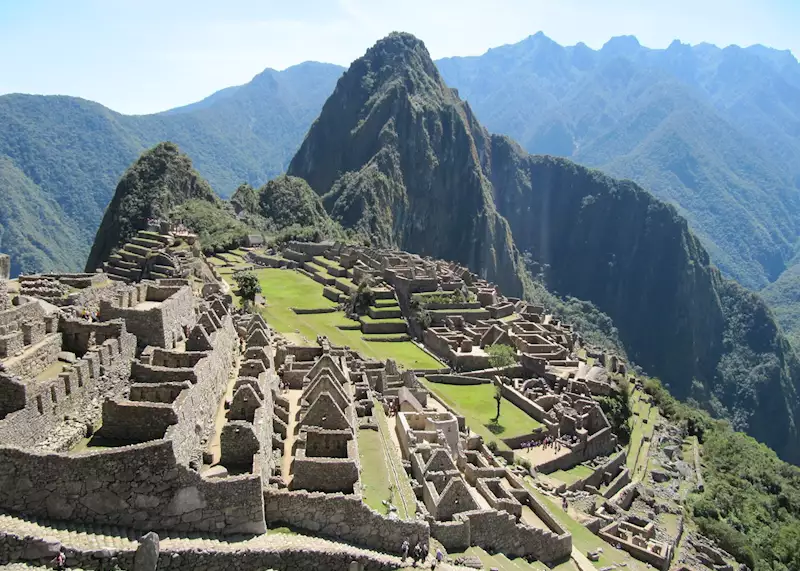
The Two Seasons at Machu Picchu
Machu Picchu sits at 2,430m in a steep river valley below the high Andes — a microclimate that receives more rain than Cusco but less than the Amazon Rainforest lowlands below. The site has two distinct seasons: the dry season (May to October) and the wet season (November to April), each offering a fundamentally different experience. The conventional advice is simple: go in the dry season. The honest advice is more nuanced — the wet season has real advantages that most planning guides ignore, and the dry season has real disadvantages that the same guides understate.
Dry Season (May to October): The Clear Sky Window
The dry season is when most international visitors come, when permits and tickets sell out fastest, and when the site is at its most crowded. The weather is mostly clear — blue skies above the ruins and the surrounding cloud forest, sharp mountain views, and the dramatic Andean light that makes Machu Picchu photographs extraordinary. The trade-offs are significant: the site reaches its daily limit of 4,044 visitors almost every day, the queue for the Huayna Picchu mountain hike forms before the gate opens, and the photography viewpoints are shared with hundreds of other cameras.
June, July, and August are the busiest months — corresponding to North American and European summer holidays. Tickets routinely sell out six to eight weeks ahead for these months. If your travel dates fall in this window, buy your Machu Picchu ticket the moment your dates are confirmed — not when you arrive in Lima or Cusco, when it will be too late. September and October are the best dry season months: still mostly clear skies, 20 to 30 percent fewer visitors than the July to August peak, and tickets available with two to three weeks notice rather than months ahead.
Wet Season (November to April): The Honest Case
The wet season at Machu Picchu is not what most travel guides describe. Rain falls mainly in the afternoon — mornings are frequently clear, often spectacularly so, with the cloud forest at its most lush and green and the ruins wrapped in the morning mist that produces the most atmospheric Machu Picchu photographs. The dramatic images of Machu Picchu emerging from cloud — the ones that make the site look genuinely mysterious — are almost universally taken in the wet season. Blue-sky photographs are beautiful; mist photographs are extraordinary.
The wet season advantages: 40 to 60 percent fewer visitors on most days, prices 20 to 30 percent lower at hotels in Aguas Calientes, tickets available with days or weeks notice rather than months, and a completely different visual quality to the site. The disadvantages: the Inca Trail closes entirely in February for maintenance, afternoon rain is frequent and heavy, some trails within the site become slippery, and the train to Aguas Calientes occasionally faces delays due to river flooding. The wet season visit requires flexible scheduling and proper waterproof gear — but rewards travellers who go prepared.
Month by Month: What to Expect
January: Peak wet season. Heavy afternoon rain, morning cloud. The site is at its greenest and most atmospheric. Very low crowds — January is one of the quietest months of the year. Prices are at their lowest. The Inca Trail is closed. Excellent value for travellers comfortable with rain gear and flexible afternoon plans.
February: The wettest month. The Inca Trail closes completely for maintenance and ecological recovery. Machu Picchu itself remains open. Visitor numbers are at their annual low. Some years bring heavy flooding on the train line — worth monitoring before travel. The site on a clear February morning, entirely alone, is one of the great Machu Picchu experiences available.
March: Still wet but beginning to ease. The Inca Trail reopens on March 1 — the first permit slots of the new season are available and competition is lower than May to August. A good option for trekkers who want the trail without the peak season crowds.
April: The transition month. Rain is decreasing and the sky is beginning to clear. Semana Santa (Easter week) brings a significant surge of Peruvian domestic tourism — book accommodation and tickets further ahead if your dates overlap with Easter. Good months: the last week of April, with improving weather and still-low international visitor numbers.
May: The sweet spot. The dry season has arrived, skies are clearing, and the international tourist wave has not yet peaked. Trails are drier than April, crowds are lower than June to August, and tickets are available with reasonable notice. The vegetation is at its most vivid green following the wet season. May is consistently recommended by guides and long-term Cusco residents as the best single month to visit.
June: Excellent weather — clear skies, low humidity, long days. June 24 is Inti Raymi (the Festival of the Sun) at Sacsayhuaman in Cusco — extraordinary if you can plan around it, but it brings a surge of visitors to the entire Cusco region including Machu Picchu. Book everything earlier for late June. The site is busy but the weather is reliable.
July: Peak season in every sense — maximum visitors, maximum prices, maximum weather reliability. Huayna Picchu mountain tickets sell out weeks ahead. Hotel prices in Aguas Calientes are at their highest. The ruins are crowded by 9am. Go in July only if your dates are fixed; otherwise May or September offer the same weather with fewer people.
August: Similar to July. Still peak season. The advantage of August over July is slightly lower European visitor numbers as European school holidays end. Still busy by any measure.
September: One of the best months. Dry season weather continues — clear skies, cool mornings, warm afternoons. Visitor numbers drop noticeably from the July to August peak as Northern Hemisphere summer holidays end. Tickets are available with 2 to 3 weeks notice. Prices at Aguas Calientes hotels begin to fall. September is the second-best month after May.
October: The dry season continues through most of October before the first rains arrive in the second half of the month. Low crowds, good prices, and still mostly reliable weather. October is an underrated month for Machu Picchu.
November: The wet season begins. Light rains in the afternoon, generally clear mornings. A good shoulder month with low crowds and reasonable weather. The site feels very different from the peak season — quieter, greener, more atmospheric.
December: Christmas and New Year bring a significant surge — the two weeks around Christmas are busy and expensive, comparable to July. Outside the Christmas window, December is a good low-crowd month.
Best Time to Visit Machu Picchu Morning: The Daily Timing
Whatever month you visit, the time of day matters as much as the season. The first entry slot (6am) is consistently the best — the site is at its quietest, the light is at its most dramatic, and the mist (present in both wet and dry seasons) is at its most photogenic. The 6am Circuit 1 ticket is the most sought-after of all Machu Picchu entry options and sells out furthest in advance. The 7am slot is a good second choice. By 9am the site is noticeably busier; by 10am it is at its most crowded.
The standard advice — arrive early — is accurate but incomplete. The specific reason to arrive at 6am is not just about avoiding crowds but about catching the light. Machu Picchu faces southeast and catches the morning sun directly from around 7am. The combination of low-angle light, morning mist, and the ruins emerging from cloud produces the photographs that define the site in the global imagination. By noon the light is flat and overhead. By 3pm the afternoon build-up of cloud (particularly in wet season) often obscures the surrounding mountains entirely.
Machu Picchu Weather by Month: The Honest Summary
There is no bad month to visit Machu Picchu — only trade-offs. The dry season gives reliable clear skies at the cost of crowds and higher prices. The wet season gives atmospheric photography and near-solitude at the cost of afternoon rain and the Inca Trail closure. May, September, and October are the closest to having the best of both: dry conditions, manageable crowds, and reasonable prices. If your dates are fixed and fall in July or August, go — just book everything months ahead. If you have flexibility, choose May or September.
For planning the broader logistics of your trip, including transportation and accommodation options, see the complete Machu Picchu getting there guide. Budget considerations for different seasons are covered in detail in the Machu Picchu budget guide.
Machu Picchu Rainy Season Photography Tips
If you visit in the wet season, the photography opportunities are exceptional but require specific preparation. A waterproof camera cover (or a large zip-lock bag) protects the camera body during rain. A circular polarising filter reduces glare and intensifies the green of the vegetation. The key timing: be at the Guardhouse viewpoint (the classic Machu Picchu photograph position) at or before 6am. In wet season, the mist often rises from the valley below as the sun warms the air — a window of 20 to 40 minutes when the ruins are partly revealed and partly hidden in cloud, producing the most extraordinary photographs possible. By 8am the mist has typically cleared or thickened into full cloud cover. That 6am to 7am window is the wet season magic hour.