Standing in front of a South America map for the first time, the sheer scale of the continent is immediately humbling. Twelve countries, the world's largest rainforest, the world's driest desert, the world's highest navigable lake, and some of the world's most diverse cities. Where on earth do you start?
The good news is that South America is forgiving of first-timers who choose wisely. Several countries offer exceptional tourist infrastructure, a manageable learning curve, and a concentration of world-class experiences that rewards a first visit with lifelong memories. Others are better suited to travellers with more regional experience.
This guide ranks the best South American countries for first-time visitors, with honest assessments of what each offers, what it demands, and who it suits best.
What Makes a Country Good for First-Timers?
Before the rankings, it helps to understand the criteria. A good first-time destination offers:
- Reliable tourist infrastructure: Accommodation, transport, and tour operators that cater to independent travellers without requiring adventurous improvisation
- A concentration of world-class highlights within a manageable geography
- Safety appropriate for travellers new to the region
- Accessibility from major international hubs without prohibitive cost or complexity
- A range of experiences that rewards travellers with different interests
- Manageable logistics — visas, transport, language, currency — that don't overwhelm first-timers
1. Peru — The Classic First Choice
Peru is the most complete South American destination for first-time visitors, and it consistently tops recommended itineraries for good reason. Within a single country, it offers:
- Machu Picchu — arguably the most spectacular archaeological site in the Western Hemisphere
- The Inca Trail — one of the world's great multi-day treks
- The Sacred Valley — a living landscape of Andean villages, ruins, and extraordinary scenery
- Lake Titicaca — the world's highest navigable lake, shared with Bolivia, with unique indigenous island communities
- Lima — a world-class food capital with superb restaurants at all price points
- The Amazon rainforest — accessible via Puerto Maldonado (one-hour flight from Cusco)
- Rainbow Mountain (Vinicunca) — a geological marvel at 5,200 metres altitude
- The Colca Canyon — one of the world's deepest canyons, with condors rising on morning thermals
- The Nazca Lines — mysterious pre-Columbian geoglyphs visible only from the air or elevated viewpoints
Tourist infrastructure: Excellent. Peru's main tourist circuit (Lima–Cusco–Sacred Valley–Machu Picchu) is one of the most polished in South America, with a wide range of accommodation, reputable tour operators, and good internal transport.
Safety: Good in tourist areas. Standard urban precautions in Lima; rural areas very safe.
Altitude: A genuine first-timer challenge. Cusco at 3,400 metres affects almost everyone. Build in acclimatisation days; don't attempt the Inca Trail or Rainbow Mountain within 24 hours of arriving at altitude.
Best for: Almost everyone. Architecture, history, nature, adventure, food, photography, hiking — Peru covers every travel interest.
How long: Two weeks minimum to cover the highlights. Three weeks ideal.
2. Colombia — The Exciting Surprise
Colombia has arguably the most dramatic positive trajectory of any travel destination in South America. From pariah state to darling of the independent travel circuit in less than two decades, it now offers one of the most diverse and exciting experiences on the continent.
What makes it great for first-timers:
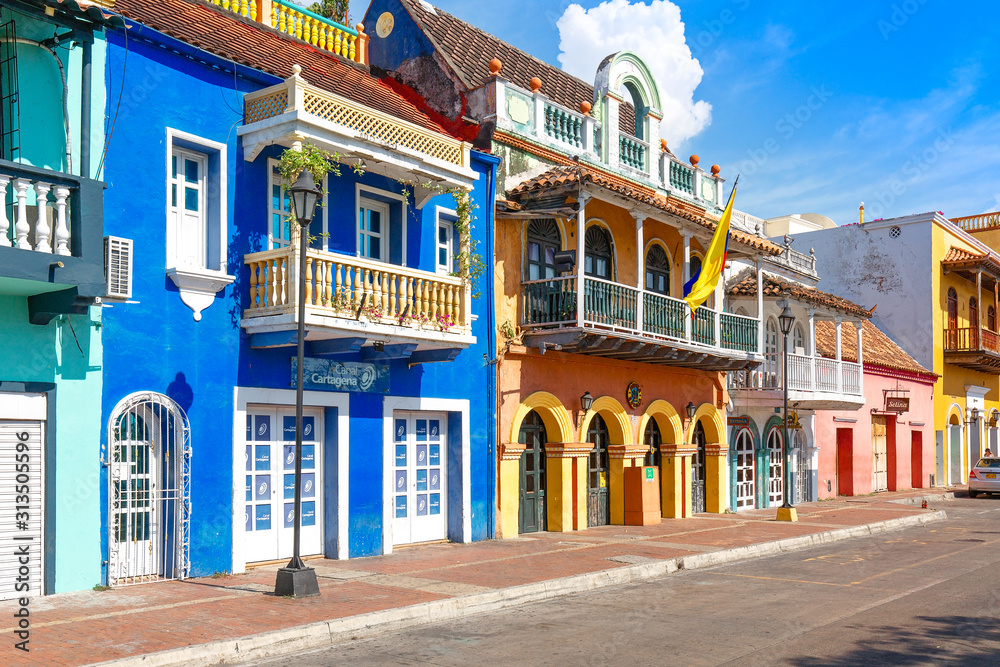
- Cartagena's walled colonial city — one of the most beautiful urban environments in South America
- Medellín — a city of extraordinary cultural energy with a remarkable transformation story
- Bogotá — a large, sophisticated capital with world-class museums (the Gold Museum alone is worth a visit), excellent restaurant and coffee scenes, and genuine urban character
- Coffee Region (Eje Cafetero) — rolling green hills, traditional architecture, the world's tallest palms in the Cocora Valley, and outstanding coffee from farm to cup
- Tayrona National Park — pristine Caribbean beaches backed by jungle on the Santa Marta coast
- Guatapé — one of the most colourful and cheerful small towns in South America, with a 740-step climb for panoramic views
Tourist infrastructure: Very good and rapidly improving. Internal flights are cheap and frequent; the main cities have excellent hostel and hotel scenes; tour operators are plentiful.
Safety: Improved dramatically but requires urban awareness (see our detailed safety guide). Use ride apps in cities; be alert in nightlife environments regarding drink spiking; avoid specific high-risk areas that are well-documented and easy to avoid on the standard tourist circuit.
Best for: First-timers who want urban energy and culture, beach access, active travel, and a sense of discovery without the altitude demands of Peru or Bolivia.
How long: Two weeks is the sweet spot for a Colombia first visit covering two or three cities plus the coast.
3. Argentina — The Familiar Stranger
Argentina offers something unique among South American first-timer destinations: a strong sense of European cultural familiarity combined with distinctly South American landscapes, passion, and flavour. The country is sophisticated, cosmopolitan, and easy to navigate — but it is also emphatically itself, not a copy of anywhere else.
What makes it great for first-timers:
- Buenos Aires — one of the great cities of the world; its food, tango, architecture, and nightlife are extraordinary
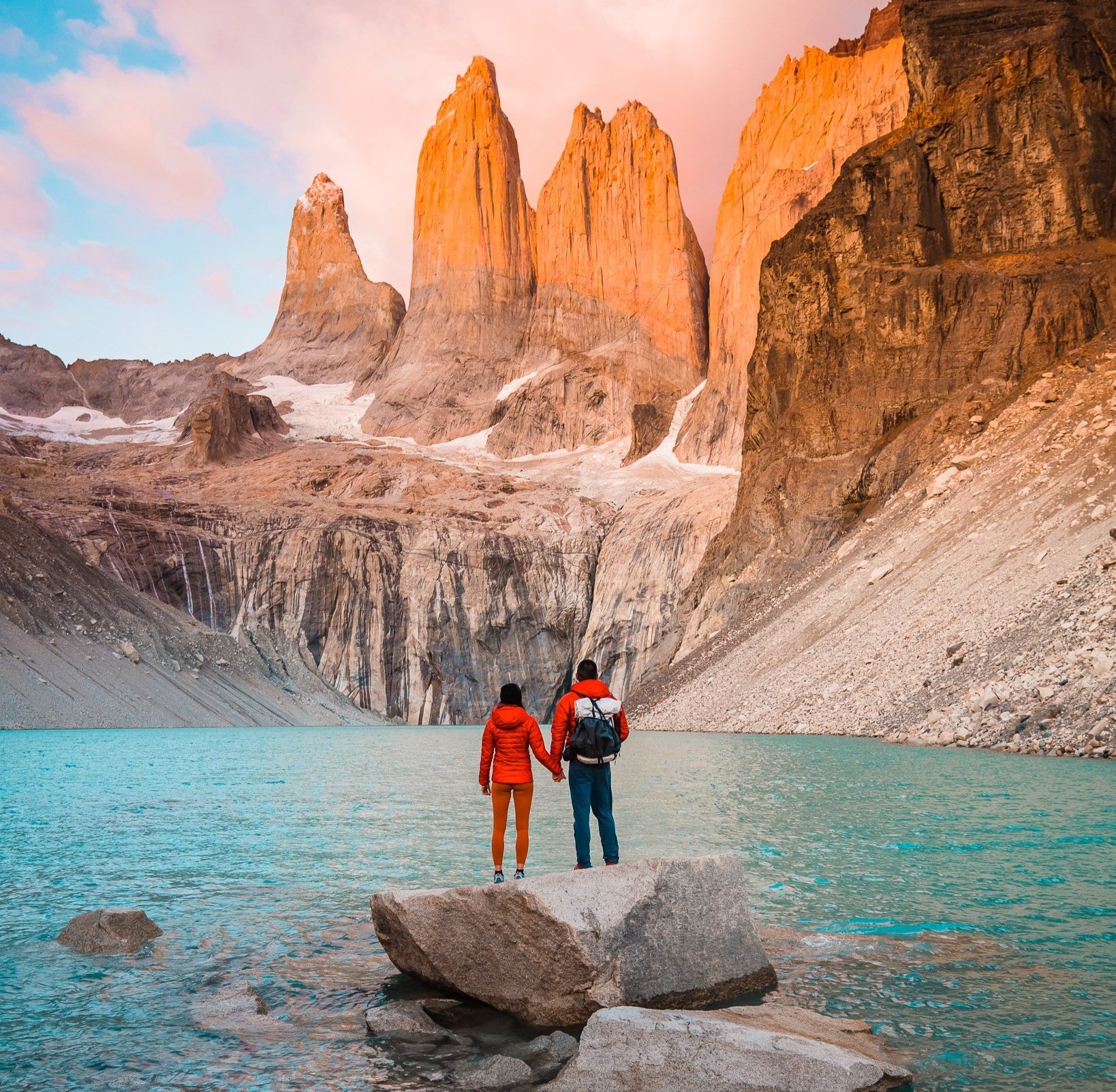
- Patagonia — Torres del Paine (shared with Chile), El Chaltén, El Calafate and the Perito Moreno Glacier constitute some of the finest mountain and glacier scenery anywhere
- Iguazú Falls — one of the world's most spectacular waterfalls, more impressive than Niagara in almost every dimension
- Mendoza wine country — world-class Malbec in a gorgeous Andean-foothills setting
- The northwest (Salta, Jujuy) — colonial architecture, Andean culture, and extraordinary coloured landscapes
Tourist infrastructure: Excellent in cities and main tourist destinations. Patagonia requires more planning but is well-developed for walkers and trekkers.
Safety: Generally good, particularly in comparison to some other South American countries. Buenos Aires requires standard urban vigilance; Patagonia is very safe.
Best for: Those drawn to urban sophistication combined with epic landscapes; wine lovers; Patagonia trekkers; those who want a mix of Europe-influenced culture and South American wilderness.
How long: Two weeks is enough for Buenos Aires plus one or two regional destinations. Three weeks allows Buenos Aires, Mendoza or Salta, and Patagonia.
4. Ecuador — Small Country, Big Variety
Ecuador is one of the world's most biodiverse countries — it packs more biodiversity per square kilometre than almost anywhere on Earth — and it does so in a compact geography that makes it remarkably accessible for first-timers.
What makes it great for first-timers:
- Quito — one of the best-preserved colonial city centres in Latin America, a UNESCO World Heritage Site, and a pleasant base at 2,850 metres
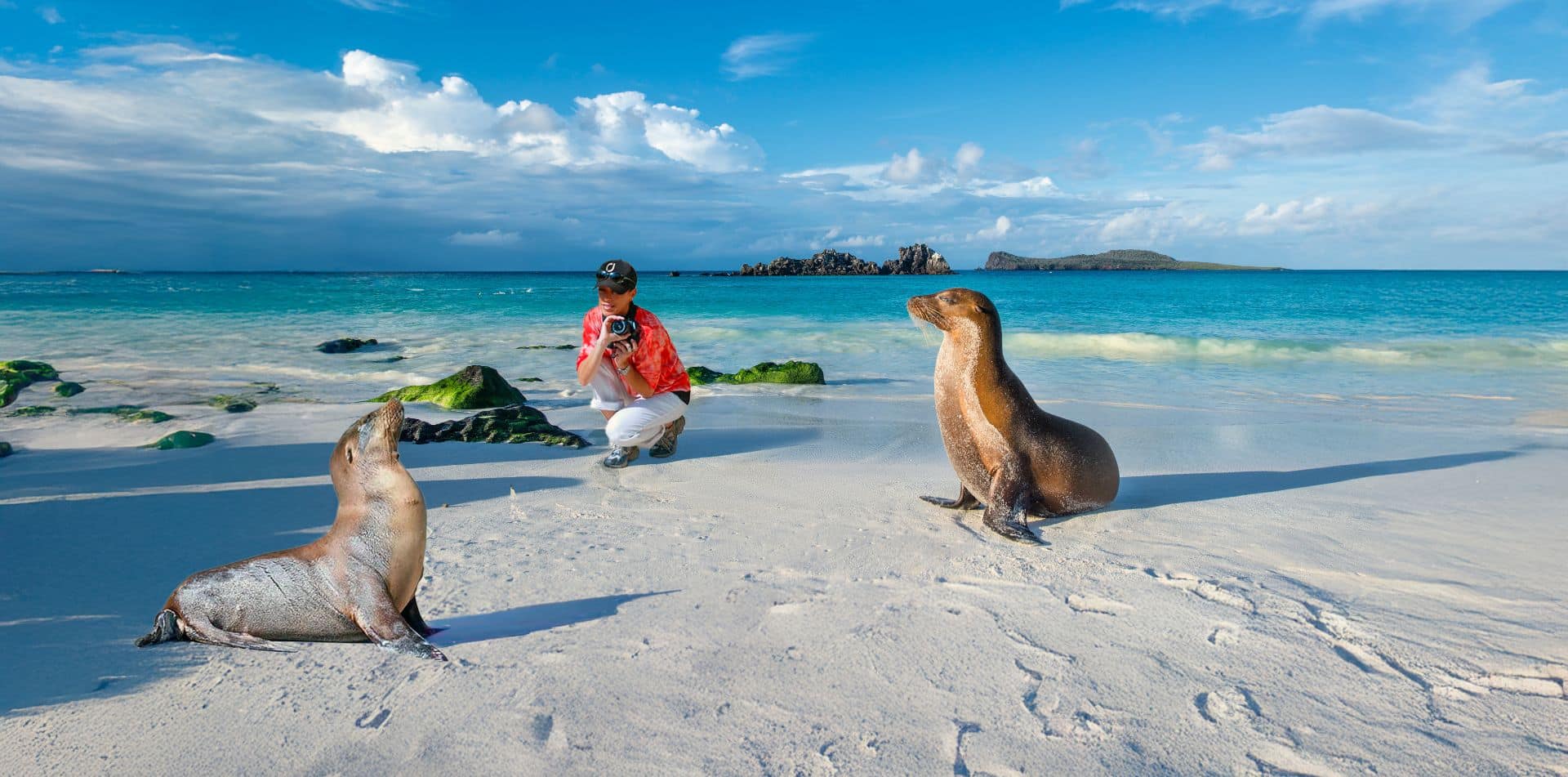
- Galápagos Islands — the most famous wildlife destination in the world, accessible via a short flight from Quito (see our full Galápagos guide)
- Avenue of the Volcanoes — a string of spectacular Andean peaks, including the perfectly conical Cotopaxi
- Quilotoa — a stunning turquoise crater lake at 3,914 metres
- Amazon rainforest (Oriente) — accessible from Quito via Coca; some of the best Amazon lodge infrastructure in South America
- Cuenca — a charming colonial city, UNESCO-listed, famous for Panama hats and a relaxed, cultured atmosphere
- Cloud forest — some of the world's most biodiverse cloud forest zones on the western and eastern Andean flanks
Tourist infrastructure: Very good. Ecuador is well-set-up for independent travellers, particularly in the Andes and Galápagos. The Galápagos requires advance booking but is logistically straightforward once you're there.
Safety: Situationally complex — see the safety guide. The main tourist areas (Quito, Cuenca, the Galápagos, the main Amazon lodges) are accessible with standard precautions; some other areas (certain northern provinces, Guayaquil) require more care.
Best for: Nature and wildlife enthusiasts; those drawn to the Galápagos; first-timers who want an accessible combination of Andes, Amazon, and islands.
How long: Two weeks covers Quito, Cotopaxi, Cuenca, and the Galápagos comfortably. Adding the Amazon requires a third week.
5. Chile — The Reliable Option
Chile is, by almost every metric, the easiest country in South America to travel in. It has the strongest institutions, the most consistent tourist infrastructure, the clearest signage, the most reliable transport, and the lowest crime rates of any major South American destination. For first-timers who are nervous about the region, or who come from highly organised countries and value predictability, Chile is the comfort zone entry point.
What makes it great for first-timers:
- Torres del Paine National Park — the most iconic trekking destination in South America
- Atacama Desert (San Pedro de Atacama) — the driest desert on Earth, with extraordinary landscapes including salt flats, geysers, flamingo lagoons, and star-studded skies that are among the clearest in the world
- Easter Island (Rapa Nui) — one of the most remote inhabited islands on Earth, home to the mysterious moai statues — a flight from Santiago of approximately five hours but a world apart
- Lake District (Bariloche area, shared with Argentina) — volcanic lakes, forest, and small German-influenced towns
- Carretera Austral — the great road trip of southern Chile
- Santiago — a sophisticated, safe, vibrant capital with good food, excellent wine bars, and easy orientation
Tourist infrastructure: Outstanding. Chile's tourist infrastructure is the most consistently reliable in South America.
Safety: Excellent — the safest major travel destination in South America.
Best for: Organised travellers who value reliability; those whose primary interests are trekking and nature; travellers concerned about safety who want maximum predictability; families.
How long: Two weeks for Santiago plus Torres del Paine or Atacama. Three weeks for both plus Easter Island.
6. Brazil — Worth the Complexity
Brazil is South America's most visited country, and it has enough to fill months of travel. But it is also one of the more logistically and safety-challenging destinations for first-timers, and the expense is higher than most of its neighbours.
What makes it great for first-timers (despite the challenges):
- Rio de Janeiro — one of the world's most visually dramatic cities
- Iguazú Falls (shared with Argentina) — world-class
- The Amazon — Brazil contains 60% of the world's largest rainforest
- The Pantanal — the world's greatest wildlife viewing destination for mammals
- Salvador and the Northeast — extraordinary Afro-Brazilian culture, music (axé, forró, samba de roda), and beach coastline
- Florianópolis — one of South America's most beautiful coastal cities
- Carnaval (February/March) — the world's greatest party
Considerations for first-timers:
Brazil is vast. Flying between major destinations is the only practical approach for trips under three weeks, and internal flights add cost. Safety requires more vigilance than in Peru, Colombia, or Chile. The country is self-contained enough (Portuguese rather than Spanish; a very strong national identity) that it rewards being treated as a standalone destination rather than an add-on.
Best for: Those making Brazil a dedicated trip rather than one stop on a broader South America circuit; beach lovers; wildlife enthusiasts targeting the Pantanal or Amazon; Carnaval visitors.
How long: Two weeks for Rio plus one or two other regions. Three weeks for a more comprehensive circuit.
Countries Better Suited to Return Visitors
A few South American countries are exceptional but better suited to travellers with some regional experience:
Bolivia: One of the continent's most fascinating countries — extraordinarily diverse, incredibly cheap, and home to the Salar de Uyuni (one of the world's great landscapes). But the altitude (La Paz sits at 3,200–4,100 metres), less polished infrastructure, and some safety considerations make it more rewarding for travellers who have some South America experience. Perfect as an add-on to Peru.
Paraguay: Rarely visited and genuinely off-the-beaten-path. Not a first-time destination, but rewarding for experienced travellers.
Venezuela: Currently experiencing a severe political and economic crisis. Not recommended for tourist travel at present.
Guyana, Suriname, French Guiana: Fascinating and largely unexplored corners of the continent, best suited to very experienced travellers with specific interests in biodiversity and indigenous culture.
Head-to-Head: Which Country Should You Choose?
| Priority | Best Country |
|---|---|
| Archaeological sites and history | Peru |
| Urban culture and nightlife | Colombia or Argentina |
| Wildlife and nature | Ecuador (Galápagos) or Brazil (Pantanal/Amazon) |
| Trekking and mountains | Peru, Argentina, or Chile |
| Beach and Caribbean | Colombia (Tayrona, Cartagena) |
| Wine and food | Argentina (Mendoza, Buenos Aires) |
| Safety and ease | Chile |
| Budget travel | Bolivia or Colombia |
| First-time overall experience | Peru |
The Verdict
For the best first South America trip covering the widest range of world-class experiences: Peru.
For urban energy, affordability, and cultural surprise: Colombia.
For iconic landscapes and European-influenced sophistication: Argentina.
For compactness, wildlife, and the Galápagos: Ecuador.
For reliability, safety, and trekking: Chile.
Whichever country you choose, South America will almost certainly exceed your expectations. It is one of those rare regions where the reality is better than the photographs — and the photographs are already extraordinary.