Two weeks in South America is enough time to have an extraordinary trip — but not enough time to do everything. The continent is vast, and the distances involved mean that trying to cover too much ground will exhaust you and your budget. The key to a successful two-week South America itinerary is choosing a regional focus and going deep, rather than skimming the surface of half a dozen countries.
This guide presents three distinct two-week routes: the Classic Peru & Bolivia route (the most popular choice for first-timers), the Colombia & Ecuador route (the best for those who want diversity from Caribbean coast to Amazon to Galápagos), and the Patagonia route (for those drawn to the south). At the end, there are tips for making the most of any 14-day trip.
Before You Start: The Golden Rule of South America
South America is not Europe. Internal flights are often the only practical way to cover distances that look manageable on a map. A bus journey between two cities that appears "nearby" can take 12 hours through the mountains. Budget for internal flights, factor in the time they take to book, and build in at least one or two buffer days for delays, altitude adjustment, and the unexpected.
Route 1: Classic Peru — The Most Popular Two-Week Trip
This is the itinerary that most first-time South American travellers gravitate toward, and with good reason: Peru packs an extraordinary concentration of world-class experiences into a relatively compact geography.
Day 1–2: Lima
Arrive in Lima, Peru's sprawling coastal capital. Two days here is sufficient to explore the essentials: the historic centre (Centro Histórico), a UNESCO World Heritage Site with Baroque churches and the remarkable Plaza Mayor; the Larco Museum (one of the finest pre-Columbian collections in the world, set in an 18th-century viceregal mansion); and Miraflores, the upscale clifftop district overlooking the Pacific where Lima's world-class restaurant scene is concentrated.
Lima's cuisine deserves special mention: the city is widely considered one of the great food capitals of the world. Ceviche from a traditional cevichería, a tasting menu at a Lima restaurant, anticuchos (beef heart skewers) from a street cart — the food alone justifies two nights.
Don't miss: Miraflores' Larcomar mall at sunset (the clifftop view is spectacular), Barranco neighbourhood's bohemian street art and the Bridge of Sighs.
Day 3–5: Cusco and the Sacred Valley
Fly from Lima to Cusco (approximately 1.5 hours). Spend the first day doing nothing more than walking slowly — Cusco sits at 3,400 metres and altitude sickness is a genuine concern. Most visitors feel some effect on arrival: headache, shortness of breath, fatigue. Hydrate, rest, and eat lightly.
Use day two to explore Cusco itself: the Plaza de Armas and Cathedral (built on the foundations of the Inca palace of Kiswarkancha), the Qorikancha (Temple of the Sun, the most important temple in the Inca Empire, later covered by a Spanish convent), the markets of San Pedro, and the artisan district of San Blas.
Day five is best spent in the Sacred Valley — the agricultural heartland of the Inca Empire, dotted with ruins, market towns, and extraordinary landscape. Pisac (market and hilltop ruins), Ollantaytambo (the best-preserved Inca town on Earth, with a formidable fortress), and Chinchero (famous for traditional weaving) are the key stops. Most travellers do this as an organised day tour or hire a private driver.
Practical note: Book your Machu Picchu tickets well before arriving — they sell out. Purchase through the official portal (machupicchutickets.com) and choose the earliest entry slot.
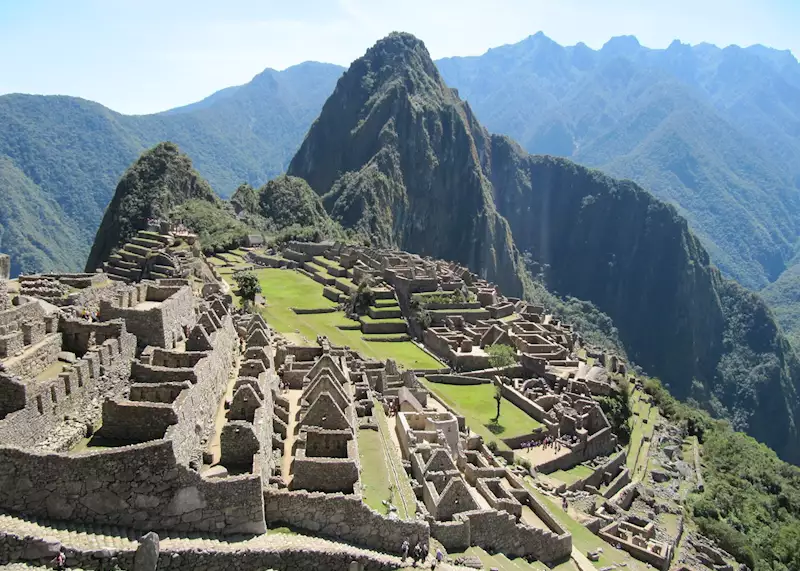
Day 6–7: Machu Picchu
Travel by train from Ollantaytambo (or Cusco's Poroy station) to Aguas Calientes (approximately 1.5–2 hours). The train journey itself is beautiful — you descend from the high Andes into cloud forest as the valley narrows.
Spend the afternoon arriving in Aguas Calientes, have dinner, and sleep early. The next morning, take the first bus up to Machu Picchu for the 6 AM opening. Spend the full morning exploring the site with a licensed guide (hire at the entrance or pre-book) — the history, the engineering, and the setting are all enhanced by good interpretation. In the afternoon, either take an additional hike (Sun Gate, Machu Picchu Mountain — book in advance) or return to Aguas Calientes to enjoy the hot springs.
Return by afternoon train to Cusco.
Day 8: Cusco Free Day or Rainbow Mountain
A flexible day in Cusco: browse the markets, visit the neighbourhood of San Blas, try more restaurants, or take an organised day trip to Rainbow Mountain (Vinicunca). Rainbow Mountain requires a very early departure (4 AM from Cusco) and significant altitude (5,200 metres) — acclimatise thoroughly before attempting it.
Day 9–11: Lake Titicaca and Puno
Take a tourist bus (approximately six hours) from Cusco to Puno on the shores of Lake Titicaca — the world's highest navigable lake, at 3,812 metres. The journey passes through the high altiplano, with stops at Pukara (pre-Inca ruins), La Raya pass, and the colonial town of Raqchi.
From Puno, take boat excursions on the lake: the Uros Floating Islands (reed islands built and inhabited by the Uros people — tourist-heavy but fascinating) and, ideally, an overnight homestay on Amantaní or Taquile islands with local Quechua families. The islands offer a glimpse of an Andean way of life that has been largely unchanged for centuries.
Day 12–13: La Paz, Bolivia (Optional Extension)
From Puno, a bus connection (approximately four hours) crosses the Bolivian border to La Paz — or continue the Peru extension with an extra Cusco day or Lima time.
La Paz is one of the world's most visually dramatic cities: a canyon of streets dropping from the altiplano rim at 4,100 metres to the valley floor at 3,200 metres, surrounded by snowy peaks. The Witches' Market (Mercado de las Brujas), the Cholita wrestlers (women wrestlers in traditional dress performing theatrical matches), and the extraordinary cable car network (Mi Teleférico) — the world's highest urban cable car system — are all essential.
Day 14: Return to Lima and Fly Home
Fly from La Paz or Cusco to Lima for a connection home (or extend your trip with Peru's Amazon — Puerto Maldonado is one hour's flight from Cusco and an easy addition).
Route 2: Colombia and Ecuador — Coast to Amazon to Galápagos
For a different flavour of South America, combining Colombia and Ecuador offers an extraordinary range of experiences without the altitude demands of Peru and Bolivia.
Days 1–3: Cartagena, Colombia
Arrive in Cartagena. Three days to explore the walled city, Getsemaní, a day trip to the Islas del Rosario, and the best of the coastal food scene (ceviche, coconut rice, fresh fish).
Days 4–6: Medellín
Fly to Medellín (1 hour). Explore the city's remarkable transformation story: Metrocable up to the comunas, the outdoor escalators of Barrio 13, the innovative urban spaces of the city centre. Enjoy El Poblado's restaurant and bar scene. Day trip to Guatapé — a colourful lakeside town with El Peñol, an enormous granite rock with 740 steps to the top, offering a panoramic view of the flooded reservoir below.
Days 7–8: Quito, Ecuador
Fly from Medellín to Quito, Ecuador's high-altitude capital (2,850 metres). Explore the Centro Histórico — the most intact colonial city centre in Latin America, a UNESCO World Heritage Site. The Basílica del Voto Nacional, the Compañía de Jesús (one of the most ornate Baroque churches in the Americas), and the Mercado Central are highlights. Day trip to the equator monument at Mitad del Mundo.
Days 9–14: Galápagos Islands
Fly from Quito to the Galápagos (1.5 hours to Baltra or San Cristóbal). Six days in the Galápagos is enough for a meaningful experience: either a short cruise (five-night) or a land-based itinerary with day trips from Santa Cruz. Wildlife encounters with sea lions, marine iguanas, blue-footed boobies, giant tortoises, and (if your timing and luck hold) waved albatrosses.
Return to Quito for your international flight.
Route 3: Patagonia — Argentina and Chile
The world's greatest landscape itinerary, if you are drawn to the south.
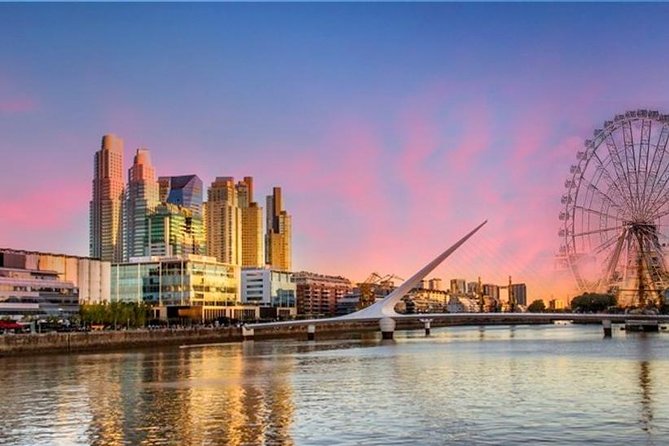
Days 1–2: Buenos Aires
Arrive in Buenos Aires. Two nights to recover from the long-haul flight and explore a neighbourhood or two — Palermo for restaurants and bars, San Telmo for tango and antiques markets, La Boca for its famous coloured houses. Enjoy a steak and a Malbec.
Days 3–5: El Calafate and Perito Moreno Glacier
Fly to El Calafate (three hours). Two days at the Perito Moreno Glacier — one of the most accessible and extraordinary glaciological spectacles on Earth. The glacier advances at a rate that produces regular calving events (blocks of ice the size of buildings breaking off into the lake with a sound like cannon fire). Walk the boardwalks, take an ice trek, or simply watch. One day is enough for most visitors; a second allows the Torres del Paine day trip below.
Days 6–8: El Chaltén and Fitz Roy
Bus from El Calafate to El Chaltén (approximately 3 hours) — the trekking capital of Argentina, a small town of 2,000 people beneath the jagged granite spires of the Fitz Roy massif. Two days hiking: the trail to Laguna de los Tres offers the classic face-on Fitz Roy view; the trail to Laguna Torre has the Cerro Torre (one of the most technically demanding peaks in the world). No permits required, no fees.
Days 9–12: Torres del Paine, Chile
Cross the border into Chile and travel to Torres del Paine National Park (approximately four hours from El Chaltén via border crossing). Three nights allows the W Trek or selected sections: the Torres viewpoint day hike (6–8 hours, extremely rewarding), Valle del Francés, and either Grey Glacier or a boat trip on Lago Pehoé.
Days 13–14: Punta Arenas or Puerto Natales and Return
Return to Puerto Natales (two hours by bus) and fly from Punta Arenas to Santiago or Buenos Aires for connection home. Alternatively, fly directly from Punta Arenas — connections via Santiago are straightforward.
Practical Tips for Any Two-Week South America Trip
Book internal flights early. South American internal flights book up fast in peak season and prices rise sharply close to departure. Book as soon as your itinerary is set.
Build in altitude adjustment time. Any itinerary involving Cusco (3,400m), La Paz (3,200–4,100m), or the Peruvian altiplano needs at least one or two low-activity days upon arrival at altitude. Don't schedule major hikes for day one at elevation.
Don't try to fit in too many countries. Two to three countries maximum is the right approach for a two-week trip. More than that means you spend too much time in airports and transit.
Get vaccinations sorted in advance. Yellow fever vaccination is recommended (and sometimes required for entry) in many Amazon and tropical regions. Consult your travel health clinic at least six weeks before departure.
Use a mix of accommodation. Budget hostels in cities save money for spending on experiences (guided wildlife tours, Galápagos, Machu Picchu). Don't scrimp on guides for key sites — a good guide at Machu Picchu or in the Amazon transforms the experience.
Learn a little Spanish. Even basic phrases open doors, generate goodwill, and improve your experience in smaller towns and markets where English is not spoken.
Two weeks in South America is a starting point, not a full stop. Most travellers who go once return for more. This continent has a way of getting under your skin.