Greetings: The Kiss on the Cheek
The standard greeting across most of South America (except Brazil, where two kisses are common, and some Andean communities where a handshake is preferred) is a single kiss on the right cheek — initiated by making cheek-to-cheek contact and making a kissing sound. This applies between women, and between a man and a woman. Men greet other men with a handshake (in most countries) or increasingly a brief half-hug in social settings. Do not attempt to avoid the cheek greeting once it is initiated — pulling away is more awkward than the contact itself. In more formal or business contexts, a firm handshake with good eye contact is standard. The hug (abrazo) between friends is warm and extended — South Americans hold physical contact in greeting longer than most Northern Europeans or North Americans are accustomed to.
Punctuality
South American 'hora' (time) operates on a different scale from Northern European or North American conventions. Social events run 30–60 minutes later than stated. Dinner invitations for 8pm realistically mean 9pm. Business appointments are more punctual — within 15 minutes of stated time is normal — but still more flexible than US or UK norms. The exception: tours, buses, and official activities run on time or early. Being on time for a social dinner is considered slightly awkward — your hosts will not be ready. Arriving 30–45 minutes after the stated time is correct behaviour in Argentina, Colombia, and Brazil.
Bargaining and Tipping Culture South America
Bargaining is appropriate at artisan markets, street markets, and informal stalls — but not at restaurants, shops with fixed price tags, or with transport services that use meters. Starting at 50–60% of the asking price and settling around 70–75% is standard. Walking away (slowly — they will often call you back with a lower price) is the most effective technique. Do not bargain aggressively or insultingly — the vendor's asking price is their starting position, not a deception. Tipping in restaurants (10% where service is not included) and for tour guides ($10–20/day) is expected and genuinely important — service industry wages are low throughout the continent.
Photography and Indigenous Communities
Always ask permission before photographing individuals — particularly in indigenous communities, markets, and religious settings. In many Andean communities, photography of people is considered intrusive or spiritually inappropriate. '¿Puedo tomar una foto?' (May I take a photograph?) with a camera-gesture is universally understood. Accept 'no' gracefully. Some vendors at markets charge $0.50–1 for photographs — this is a reasonable request for their time and image. Photographing inside churches during services is almost universally inappropriate regardless of the country.
Football
Football (soccer) is more than a sport in South America — it is the primary shared cultural reference across class, ethnicity, and geography. Showing genuine interest in the local team opens conversations that nothing else will. Know that Argentina–Brazil and Argentina–Uruguay rivalries are tribal and intense — voicing an opinion on these requires knowing your audience. Never suggest that any South American team is inferior to a European equivalent in the company of locals; this is received as an insult rather than an observation.
Religious Respect
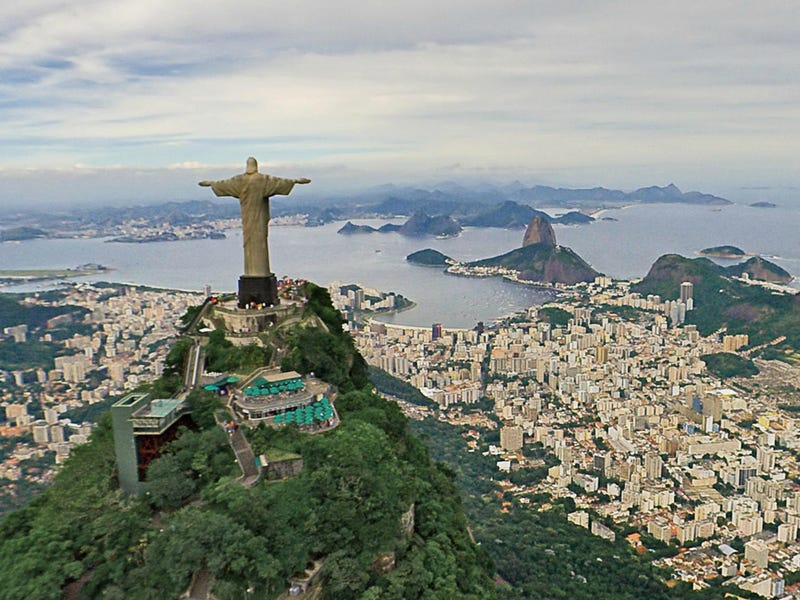
Catholicism (with strong syncretic indigenous elements in Peru, Bolivia, Ecuador, and Colombia) is the dominant religious tradition throughout South America. Church visits require covered shoulders and knees — carry a light scarf. Avoid loud conversations in churches and respect ongoing services. The syncretic festivals (Inti Raymi, Oruro Carnival, Corpus Christi in Cusco) blend Catholic and pre-Columbian traditions in complex ways — approach them with genuine curiosity rather than treating them as tourist performances. When visiting key sites like Machu Picchu or exploring cities like Cartagena and Rio de Janeiro, these cultural sensitivities become especially important in sacred spaces and local communities.