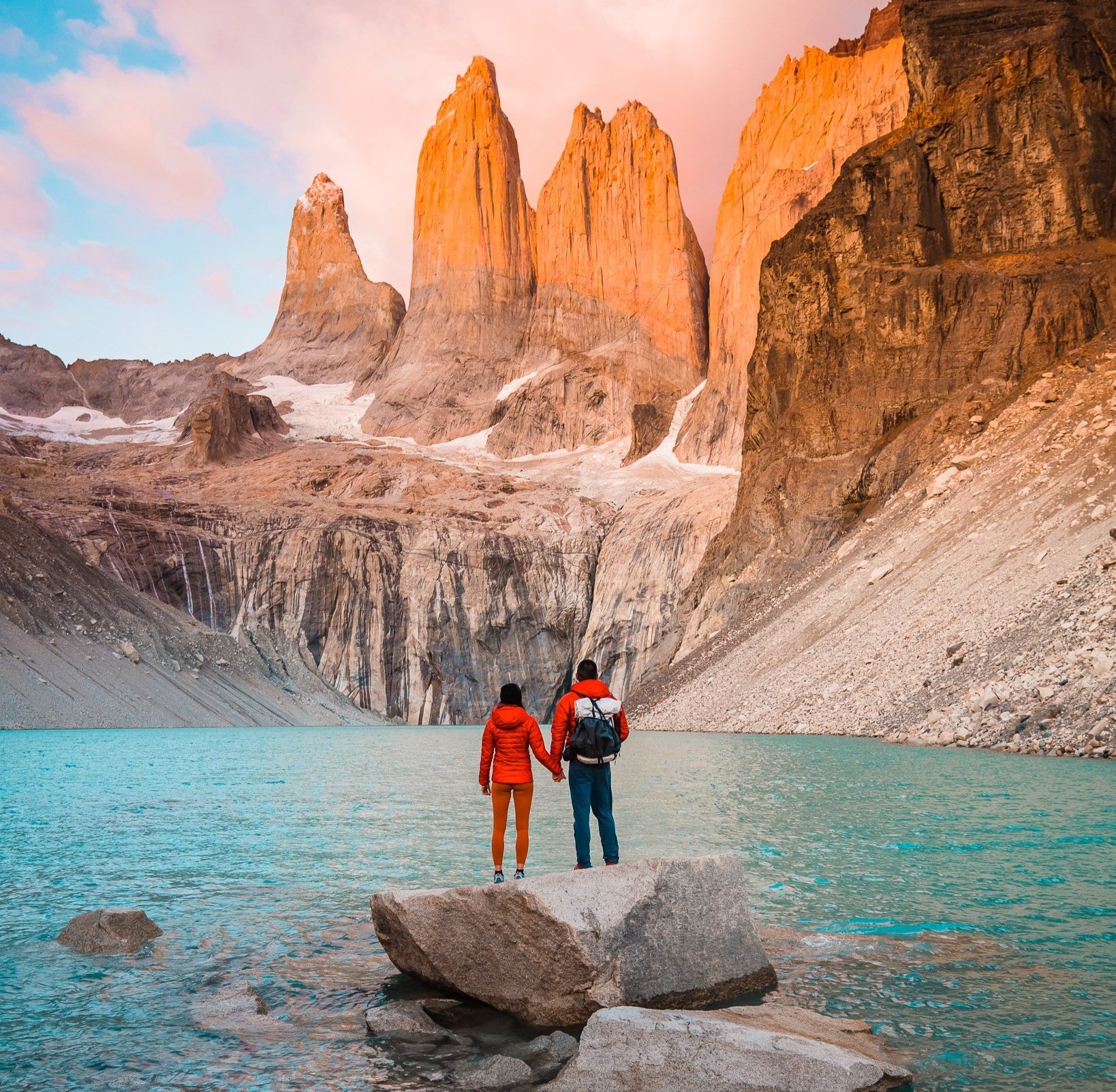
The Trekking Season: October to April
The W Trek, O Circuit, and most Patagonian multi-day routes are accessible only during the austral summer — October through April. The Torres del Paine refugios open in mid-October and close in late April; outside this window, the backcountry is effectively inaccessible for standard trekkers. Within the trekking season, the conditions, crowds, and prices vary significantly by month — understanding these differences is the difference between a wonderful trip and an unnecessarily difficult one.
October: Early Season
The refugios are reopening and staffing up. Spring wildflowers are appearing on the lower slopes — yellow calceolaria and white blechnum ferns cover the hillsides. Crowds are very low — the W Trek in October is a fraction of its December–February capacity. Weather is unpredictable: warm sunny days alternate with cold fronts; snow is possible above 1,000m. For experienced trekkers comfortable with variable conditions and who value solitude above all, October is an excellent month. Prices are 20–25% below peak. Book refugios 4–6 weeks ahead.
November: The First Sweet Spot
Consistently the most recommended month by experienced Patagonia guides. Weather is improving and increasingly reliable. The wildflower season is at its peak — the lower Paine slopes are covered in colour. Refugios are open and fully staffed but not yet full — you can book 4–6 weeks ahead without the 6-month lead time required for December–February. Prices are still 15–20% below peak. Puma sightings are still possible (the cats have not yet retreated to higher elevations). Daylight extends to 17–18 hours by late November.
December to February: Peak Season
Austral summer at its full power — up to 18 hours of daylight, temperatures of 12–22°C on good days, all services fully operational. The W Trek is at capacity every day; the Paine towers viewpoint is crowded by 10am; prices are at their absolute highest. The advantages: the most reliable weather window, the highest chance of clear summit views, the longest days for photography. The non-negotiable: book everything — refugios, hotels, transfers, park bus — 6–12 months ahead for December–February dates. Attempting to plan a December Torres del Paine trip in October is too late for the most popular sites.
March: The Second Sweet Spot
The most beautiful month in Torres del Paine for photographers. The lenga beech trees — the dominant forest species in Patagonia — begin their extraordinary autumn colour change in March, turning from green through gold to vivid orange and red. This is the colour that appears in the most spectacular Torres del Paine photographs, and it is available only in March–April. Crowds thin significantly after the Argentine and Chilean school holidays end in early March. Weather is generally still reliable. Prices drop 15–20% below February. March is arguably the finest single month in the park.
April and May: Autumn
The lenga beech colour is at its peak in April — the orange and red forests with the granite towers above are extraordinary. Very few visitors. Some refugios closing from mid-April. Weather becoming more variable; cold nights (near 0°C) require proper equipment. Good for independent travellers and photographers who embrace uncertainty. The W Trek is still doable in early April with the right gear.
Patagonia Weather by Month: The Summary
Best overall: November and March (shoulder seasons, lower prices, lower crowds, wildflowers and autumn colour respectively). Best for trekking certainty: December–January (most reliable weather, longest days — accept the crowds and book 6–12 months ahead). Best for pumas: June–August (winter wildlife season — backcountry trekking closed but day hiking and puma tracking excellent). Best for photographers: March (autumn colour + possibility of clear tower views).