Why Ollantaytambo Deserves More Than a Transit Stop
Most visitors to the Machu Picchu region pass through Ollantaytambo twice — once on a Sacred Valley day tour and once to catch the train to Aguas Calientes. Most spend between 90 minutes and two hours at the fortress, take photographs, and move on. This is one of the great missed opportunities in Peru travel. Ollantaytambo is not merely a transit point or an archaeological site to photograph — it is a living Inca town of extraordinary historical significance, whose original urban grid, water channels, and stone buildings have been continuously inhabited for over 500 years. Spending a night here, when the day tour buses have left and the cobblestone streets belong almost entirely to local residents, is one of the genuinely special small experiences available in the Cusco region.
The transformation that occurs in Ollantaytambo after 4pm is remarkable. During the day, the streets around the fortress entrance are crowded with tour groups, souvenir vendors, and buses maneuvering through narrow spaces. By evening, the same streets become peaceful pathways where local children play football in the plazas, elderly residents sit on stone steps that have been used for the same purpose for centuries, and the only sounds are water running through the ancient channels and occasional conversations in Quechua echoing off the stone walls. This transition from tourist destination to living community happens daily, and experiencing both sides provides a far richer understanding of what makes Ollantaytambo unique.
Ollantaytambo Things to Do: The Fortress
The Ollantaytambo archaeological complex is the most impressive Inca fortress in Peru outside Cusco itself — a cascade of massive agricultural terraces protecting a temple complex at the summit, with stonework of a scale and precision that rivals anything at Machu Picchu. The site is included in the Boleto Turístico ($40 USD), which covers entry to 16 Cusco-region sites. Allow two to three hours to do it properly: the climb to the Temple of the Sun at the summit takes approximately 30 minutes and involves significant stair climbing at altitude.
The Temple of the Sun is the architectural centrepiece — a partially completed structure of massive monolithic stones fitted with extraordinary precision. The stones were quarried from the Cachicata quarry on the opposite side of the Urubamba Valley, a logistical achievement that modern engineers still struggle to fully explain given the available technology. Look for the unfinished sections where the quarried stones were abandoned mid-transport when the Spanish arrived — a frozen moment of history still visible in the landscape.
The agricultural terraces below the fortress (the most elaborate in the entire Sacred Valley) were not merely productive — they were engineered with slightly different soil compositions and drainage at each level to create microclimatic conditions for different crops. The Incas were agricultural scientists as well as engineers, and Ollantaytambo was their laboratory.
For the best photographic light and smallest crowds, visit the fortress between 8am and 9am or after 4pm. The morning light illuminates the Temple of the Sun beautifully, while late afternoon provides dramatic shadows across the terraces. Most day tours arrive between 10am and 2pm. Bring water and sun protection — there is minimal shade on the terraces, and the combination of altitude and reflection from the stone surfaces can be intense even on cloudy days. The climb involves approximately 200 stone steps, and the site elevation is 2800 meters above sea level.
Ollantaytambo: The Living Inca Town
Below the fortress, the town of Ollantaytambo itself is extraordinary. Unlike most historic towns in Peru where the colonial and modern have replaced the pre-Columbian, Ollantaytambo's urban structure remains almost exactly as the Incas planned it. The canchas (large blocks of housing sharing a central courtyard) on both sides of the main streets follow the original Inca planning. Water channels run down every street — still functioning, still carrying water from the mountain springs above exactly as they did in the 15th century. The stone doorways, the trapezoidal niches in the walls, and the massive stones forming the street-level foundations are all original Inca construction.
Walking the streets away from the fortress entrance — east toward the Plaza Manyaraqui and north along Calle del Medio — takes you into a neighbourhood that is genuinely and continuously Inca. Local families live in buildings whose foundations were laid under Pachacutec. The experience of walking on original Inca paving stones through streets that have been continuously inhabited for 600 years is unlike anything available elsewhere in the Americas.
Pay particular attention to the water management system as you explore. The channels that run alongside every street are fed by springs in the mountains above and flow continuously toward the Urubamba River below. Many homes still use these channels for washing and irrigation, exactly as their ancestors did. The engineering is so precise that the flow rate and direction can be controlled by adjusting stone gates at key intersections — a system that requires no external power source and has functioned without interruption for centuries. On Calle Pentecostés and Calle del Medio, you can see where modern residents have built small bridges over the channels to access their front doors, creating a layering of old and new that exemplifies how the town continues to evolve while respecting its original design.
Ollantaytambo as a Machu Picchu Base
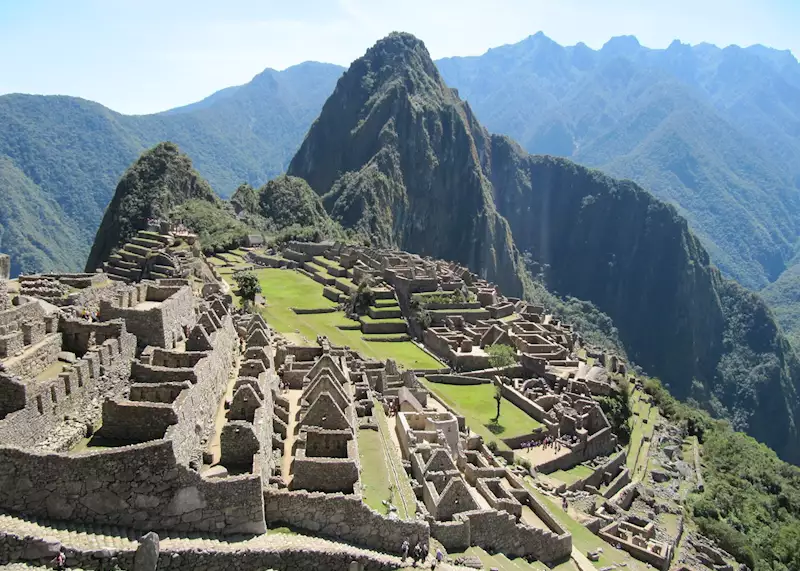
Ollantaytambo is the smartest base for a Machu Picchu itinerary visit, and far fewer people take this approach than should. The train to Aguas Calientes (the village below Machu Picchu) departs from Ollantaytambo station — a 30-second walk from the town centre — rather than from Poroy station near Cusco (a 20-minute taxi from the city). The journey time from Ollantaytambo to Aguas Calientes is 1 hour 45 minutes versus 3 hours 30 minutes from Cusco via Poroy. The shorter journey means an earlier arrival, more time at the site, and a more relaxed overall experience.
The practical Machu Picchu getting there itinerary from Ollantaytambo: take the afternoon or evening train to Aguas Calientes (PeruRail or Inca Rail, book in advance), spend the night in Aguas Calientes, catch the first bus to Machu Picchu at 5:30am, spend 4 to 5 hours at the site, take the afternoon train back to Ollantaytambo, and continue to Cusco or stay another night in Ollantaytambo. This sequencing saves 3 to 4 hours of travel compared to doing the same trip entirely from Cusco.
An even better approach for those with flexibility is to take the afternoon train to Aguas Calientes, spend one night there, visit Machu Picchu the following morning, return to Ollantaytambo on the afternoon train, and spend a second night in Ollantaytambo to explore the town properly before returning to Cusco. This creates a three-day, two-night itinerary that allows sufficient time for both Machu Picchu and Ollantaytambo without feeling rushed. The cost difference compared to staying in Cusco is minimal, and the experience is significantly richer. Train schedules are more flexible from Ollantaytambo than from Cusco, with departures throughout the day rather than just morning and early afternoon options.
Sacred Valley Villages: Day Trips from Ollantaytambo
Staying in Ollantaytambo rather than Cusco also provides easier access to the western Sacred Valley villages that most day tours from Cusco reach only briefly. Moray — the extraordinary concentric circular agricultural terraces in a natural depression — is 30 minutes east of Ollantaytambo by taxi (approximately 30 soles each way). The Maras salt mines are 20 minutes in the same direction. The village of Chinchero — with its famous weaving community and Sunday market — is 45 minutes toward Cusco. All of these are more relaxed and rewarding when reached independently without the time pressure of a group tour departing from Cusco.
For independent travelers, the most efficient approach is to hire a taxi for the half-day to visit both Moray and Maras together — most drivers will wait at each site for 60 to 90 minutes for approximately 80 to 100 soles total. Moray requires about 90 minutes to explore properly, including the walk down into the circular terraces and back up. The salt mines at Maras are best visited in the afternoon when the light reflects off the thousands of salt pools more dramatically. Entry to Moray is included in the Boleto Turístico; the Maras salt mines charge a separate entrance fee of 10 soles.
Best Time to Visit Ollantaytambo
Ollantaytambo's climate is generally pleasant year-round, but timing can significantly affect your experience. The dry season from May to September offers the most reliable weather for outdoor activities and photography, with clear skies and minimal rainfall. July and August are peak season with the largest crowds and highest prices, but also the most predictable conditions for train travel and fortress visits.
The shoulder seasons of April-May and September-October provide an excellent balance of good weather and smaller crowds. During these periods, accommodation rates are lower, restaurant reservations easier to secure, and the fortress terraces less crowded for photography. The wet season from December to March brings afternoon rains and occasional disruptions to train service, but also fewer tourists and dramatically lower prices. The landscape is at its greenest during the wet season, and morning visits to the fortress often enjoy clear skies before afternoon clouds develop.
For those interested in local culture, visit during the village festival periods. The Ollantaytambo Raymi celebration in late January features traditional dancing and music in the Plaza de Armas. Corpus Christi in June brings religious processions through the Inca streets. These celebrations offer rare opportunities to experience the town's continuing cultural traditions alongside its archaeological heritage.
Where to Stay in Ollantaytambo
Ollantaytambo's accommodation scene is small but excellent. El Albergue (located literally inside the train station, with a beautiful garden restaurant and rooms built around a traditional hacienda courtyard) is the most famous and most recommended — it has been operating for over 40 years and set the standard for lodge-style accommodation in the Sacred Valley. Rates from $120 to $200 per night including excellent breakfast. The attached restaurant (El Albergue Restaurant) is consistently one of the finest in the entire Sacred Valley — the wood-fired oven, the organic garden, and the quality of the local ingredients combine to produce meals that many visitors describe as the best they eat in Peru.
For mid-range options, Samanapaq ($60 to $100 per night) and Apu Lodge ($70 to $120) both offer comfortable rooms with views of the fortress from their terraces — waking to the Inca citadel lit by the morning sun across the valley is a genuinely extraordinary way to start a day. Budget travellers will find guesthouses in the 25 to 50 dollar range along the main streets, family-run operations with simple rooms and the same cobblestone-street access as the more expensive options.
When booking accommodation, consider proximity to both the train station and the fortress entrance. Properties within two blocks of the Plaza de Armas provide easy walking access to restaurants, the fortress, and the train station without requiring luggage transport over cobblestones. Many guesthouses offer luggage storage for guests taking day trips to Machu Picchu, which is essential since train regulations limit luggage size. Request rooms facing the valley rather than interior courtyards for better views and natural light, though be aware that street-facing rooms can experience noise from early morning train departures and late-night arrivals.
Food and Restaurants in Ollantaytambo
Beyond El Albergue's restaurant, Ollantaytambo has a compact but decent dining scene oriented around the Plaza de Armas and the fortress entrance street. Hearts Café (long-running traveller favourite, good breakfasts and lunches, reliable WiFi) and Chuncho (Peruvian menu, excellent quinoa dishes, locally sourced ingredients) are the most consistently recommended independent options. The market stalls on the main street toward the fortress sell excellent empanadas and fresh juice from 7am — the best cheap breakfast in town. Aguas Calientes (the Machu Picchu base town) has considerably worse and more expensive food than Ollantaytambo — eating a proper dinner in Ollantaytambo before or after the train is strongly recommended over eating in Aguas Calientes if the schedule allows.
For authentic local cuisine, seek out the small restaurants along Calle Conveción where local families serve traditional dishes like cuy (guinea pig), alpaca steaks, and locro (hearty potato and corn stews) at significantly lower prices than tourist-oriented establishments. These family-run restaurants typically operate lunch service only and may not have menus in English, but the food quality is excellent and provides insight into genuine Sacred Valley cuisine. Pisko Sours and local beers are available at most restaurants, though wine selections are limited compared to Cusco.
Practical Tips for Visiting Ollantaytambo
ATM availability in Ollantaytambo is limited to one machine near the Plaza de Armas, and it frequently runs out of cash or experiences technical problems. Bring sufficient cash from Cusco to cover your entire stay, including meals, accommodation, transportation, and souvenir purchases. Most restaurants and shops accept only cash, and credit card facilities are unreliable.
Internet connectivity is adequate for basic communication but unsuitable for video calls or large file uploads. Most accommodations and restaurants offer WiFi, though speeds are inconsistent during peak evening hours when usage is highest. Plan accordingly if you need to maintain business communications or social media presence during your stay.
The altitude in Ollantaytambo (2800 meters) is lower than Cusco (3400 meters) and generally causes fewer acclimatization problems, but visitors should still take precautions against altitude sickness. Drink plenty of water, avoid alcohol for the first 24 hours, and allow time to rest if you experience headaches or fatigue. Coca tea is available at all restaurants and can help alleviate mild altitude symptoms.
Pack layers for changing weather conditions throughout the day. Mornings and evenings can be cold, particularly during the dry season, while midday temperatures in direct sunlight can be uncomfortably warm. A rain jacket is essential during the wet season and advisable year-round for unexpected weather changes. Comfortable walking shoes with good grip are necessary for exploring both the fortress terraces and the cobblestone town streets.
Getting to Ollantaytambo from Cusco
The most comfortable option is the PeruRail bus service (book online, departs from Cusco's Wanchaq station or the Cusco Bus Terminal, 1 hour 45 minutes, approximately $15). Alternatively, shared colectivo taxis leave from Avenida Grau in Cusco throughout the morning for 15 soles per person — slightly longer but cheap and leaving frequently. Private taxis from Cusco to Ollantaytambo cost 60 to 80 soles and take 90 minutes. The road is paved and straightforward. From Ollantaytambo, the train to Aguas Calientes requires advance booking through perurail.com or incarail.com — book at least one week ahead in peak season (May to September) and months ahead for July and August.
The shared colectivo option provides the most authentic local experience and opportunities to interact with Peruvian travelers, though comfort levels vary significantly depending on vehicle condition and number of passengers. Colectivos typically seat 4 passengers plus driver and depart when full rather than on fixed schedules. The journey includes spectacular views of the Sacred Valley that are not visible from train windows, and drivers often stop briefly at scenic viewpoints if passengers request it. For solo travelers or those on tight budgets, the colectivo system is efficient and reliable, though not recommended for those with large luggage or mobility concerns.