What Is Rainbow Mountain?
Vinicunca — known internationally as Rainbow Mountain Peru — is a 5,200-metre peak in the Cusco region whose slopes are striped with extraordinary bands of colour: deep crimson, gold, turquoise, green, and lavender, produced by mineral deposits exposed by glacial retreat over the past several decades. The mountain was essentially unknown to the outside world until around 2015, when retreating ice revealed the coloured sediment beneath and photographs began circulating on social media. Within two years it became the second most visited site in the Cusco region after Machu Picchu itself. The colours are entirely natural — the result of different mineral compounds in the soil: red from iron oxide, yellow from sulphurous minerals, green from copper sulphate, turquoise from iron silicates.
How to Get to Rainbow Mountain from Cusco
Rainbow Mountain is 100km from Cusco — a 3-hour drive on paved and then unpaved road, reaching the trailhead village of Cusipata at 4,300m. Almost all visitors take an organised day tour from Cusco, departing between 3am and 4am. The early departure is essential: the mountain is most dramatic in the morning light before clouds build, and arriving before 9am means you will be ahead of the main wave of tour groups. Tours cost 70 to 120 soles ($18-32) per person and include transport, a guide, and basic breakfast. You can also drive independently or take a public bus from Cusco to the Checacupe area and arrange a local guide from there — cheaper but logistically more complex.
The trailhead sits at 4,300m altitude. The hike to the summit viewpoint is 8km return with 600m of elevation gain — straightforward in terms of terrain (a wide, well-marked path) but demanding in terms of altitude. Most walkers take 2 to 3 hours to reach the top and 90 minutes to descend. The trail passes through high-altitude puna grassland with llamas and alpacas grazing on the slopes, and the final section breaks onto the ridge with the full coloured valley below.
Vinicunca vs Red Valley: Which Side Trip?
From the Rainbow Mountain summit, a further 30 to 45-minute walk leads to the Red Valley — a secondary viewpoint that most visitors skip entirely. The Red Valley looks back toward Vinicunca from a different angle and has almost no one in it. If you are a photographer, the Red Valley is the better shot: you can photograph Vinicunca with the coloured slopes visible from above, rather than standing on them looking up. The combination of both viewpoints requires arriving at the trailhead by 7am at the latest to have time for both before the clouds arrive.
Altitude: The Most Important Planning Factor
At 5,200m, Rainbow Mountain sits higher than Mont Blanc and nearly as high as Everest Base Camp. Altitude sickness affects visitors regardless of fitness — the oxygen concentration at the summit is approximately 50% of sea level. The absolute minimum acclimatisation before attempting Rainbow Mountain is two full nights in Cusco (3,400m). Three nights is better. Do not attempt the hike on your first or second day in Cusco — the results are miserable for many people and occasionally dangerous. Symptoms to watch: severe headache, vomiting, loss of coordination, confusion. Any of these mean descend immediately.
The practical acclimatisation approach: spend days one and two in Cusco doing light sightseeing — the city itself, San Blas, Qorikancha — without strenuous uphill walking. On day three, do the Sacred Valley day trip (2,800m, lower than Cusco). On day four or later, you are ready for Rainbow Mountain. This sequencing allows your body to adapt progressively. Diamox (acetazolamide) taken from day one reduces AMS symptoms significantly — consult your doctor before travel and start it 24 hours before ascending to altitude.
Rainbow Mountain Hike Cusco: What to Wear and Carry
The weather at 5,200m is extreme by any standard. Start the hike in every layer you own — the 4am departure from Cusco means arriving at the trailhead in dark, cold conditions (often below 0 degrees Celsius). As the sun rises, you will shed layers. By mid-morning the sun at altitude is fierce — UV radiation at 5,200m is substantially higher than at sea level, and the combination of altitude and reflected light from the remaining snow means sunburn occurs very quickly. Essential items: waterproof windproof jacket (wind at the summit is frequently severe), warm hat and gloves for the approach, sun hat and SPF50 sunscreen for the summit, 3 litres of water minimum, and high-energy snacks.
Trekking poles are genuinely useful on the descent — the high-altitude trail on loose earth is harder on the knees going down than up. Rent in Cusco for 10 to 15 soles per day. The trailhead has horse rental for those who cannot manage the altitude on foot — horses carry riders the full trail for approximately 50 to 80 soles each way. This is a legitimate option, not a concession to weakness — altitude affects fit people just as severely as unfit ones.
Best Time to Visit Rainbow Mountain Peru
The dry season (May to October) is the recommended window. In the wet season (November to April), the trail becomes extremely muddy and the summit is frequently cloud-covered, hiding the very colours you came to see. May and October are the shoulder months — the trail is drier than the peak of the wet season and the crowds are thinner than July and August. The ideal months are June, July, August, and September for reliable clear skies, but July and August also see the highest visitor numbers from North American and European summer holidays.
The single most important timing decision is within the day rather than the season: arrive at the trailhead before 7am without exception. By 10am the standard tour groups are ascending; by noon the summit can have hundreds of people. The mountain is most photogenic in the first two hours of light and most coloured when the angle of the sun is low. An early start is not a preference — it fundamentally changes the experience.
Rainbow Mountain Tours from Cusco: Choosing the Right Operator
Dozens of operators in Cusco run Rainbow Mountain day tours. The meaningful differences between them: departure time (prefer tours departing before 3:30am to reach the trailhead early), group size (smaller groups of 8 to 12 are significantly more pleasant than buses of 40), guide quality (a knowledgeable English-speaking guide adds substantial context), and whether the Cusco to trailhead vehicle is a proper 4WD or a cramped shared van on an unpaved road at 4am.
Reputable agencies in Cusco include Apus Peru, Peru Treks, and Alpaca Expeditions — all run smaller-group tours with English guides. The booking hostels (Loki, Pariwana) often have group departures that work well for solo travellers. Avoid the ultra-cheap tours advertised on laminated cards in the Plaza de Armas — the departure times are later, the vehicles are basic, and the guides are frequently absent or non-English-speaking.
Can You Do Rainbow Mountain Independently?
Yes — and doing it independently means arriving before the tours and having the summit largely to yourself. The logistics: take the first public bus from Cusco to Sicuani (departing around midnight from Avenida Huáscar, 3 hours, 15 soles) and then a colectivo to the Checacupe junction and onward to the trailhead. Alternatively, hire a private driver from Cusco (300 to 400 soles total for the vehicle, worthwhile for a group of 3 to 4 people). At the trailhead, local guides are available for 30 to 50 soles — you do not need a guide for navigation but they add altitude knowledge and context. The entry fee to the community land is 10 soles, payable at the trailhead gate.
Combining Rainbow Mountain with Machu Picchu
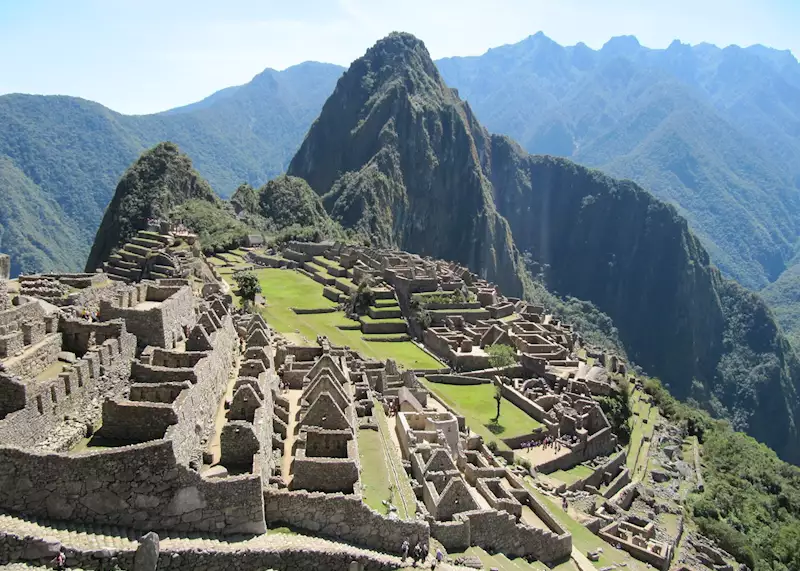
The standard Cusco itinerary that includes both: days one and two in Cusco acclimatising, day three the Sacred Valley and Ollantaytambo, day four Machu Picchu (train from Ollantaytambo, overnight in Aguas Calientes), day five Machu Picchu morning and return to Cusco, days six or seven Rainbow Mountain. This sequence places Rainbow Mountain after three to four nights at altitude — which is the correct acclimatisation order. Doing Rainbow Mountain before Machu Picchu is fine in terms of logistics; the altitude of Rainbow Mountain (5,200m) actually prepares the body better for subsequent days at altitude.
For the complete Cusco region experience, the three unmissable elements are the Sacred Valley, Machu Picchu, and Rainbow Mountain — each so different from the others that they do not compete. The Sacred Valley is archaeology and living Andean culture; Machu Picchu is the great Inca monument; Rainbow Mountain is pure geological spectacle. Together they represent the Cusco region at its most extraordinary.
Frequently Asked Questions
How hard is the Rainbow Mountain hike? Moderately hard due entirely to altitude. The path is wide and not technical. The challenge is entirely physiological — breathing at 5,200m is hard regardless of fitness. With good acclimatisation, most reasonably healthy people complete it.
Is Rainbow Mountain worth it? If you have sufficient acclimatisation time, yes — it is one of the most visually extraordinary landscapes in the Andes. If you are arriving in Cusco and leaving two days later, it is not worth the altitude risk.
Can you see Rainbow Mountain from Machu Picchu? No — they are in completely different directions from Cusco. Rainbow Mountain is southeast of Cusco; Machu Picchu is northwest.